You’re sitting at your desk, staring at a spreadsheet that’s keeping you up at night. Your candles are gorgeous. Your scents are unique. Your customers love what you make. But there’s this one nagging problem that won’t go away: your packaging budget is eating into your already-thin margins, and you know your competitors with their fancy gift boxes are winning sales you should be getting.
Here’s the brutal truth that nobody in the packaging industry wants to tell you: expensive-looking packaging doesn’t actually require an expensive budget. The brands you’re jealous of—the ones with that pristine unboxing experience and Instagram-worthy presentation—aren’t necessarily spending more than you. They’re just spending smarter.
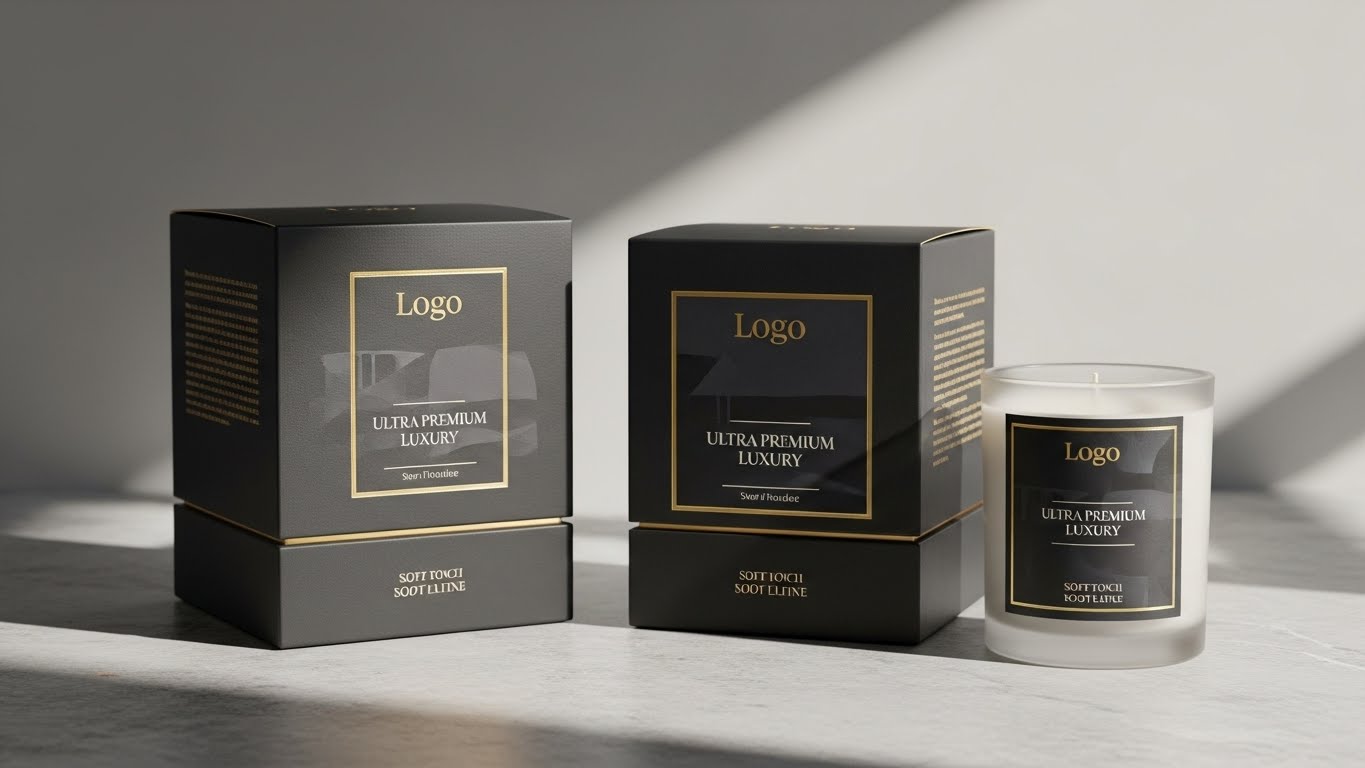
The difference between packaging that screams “budget product” and packaging that whispers “luxury gift” often comes down to a few strategic choices, not a massive price difference. And that’s exactly what we’re unpacking today. Whether you’re selling $12 candles at craft fairs or $45 premium candles online, affordable candle gift packaging can absolutely compete with high-end competitors when you know which elements matter most.
Let’s explore how small candle businesses are creating packaging that looks three times more expensive than it actually costs—and more importantly, how you can do the same starting with your very next order.
💰 The Real Cost Breakdown: Where Your Packaging Budget Actually Goes
Before we dive into solutions, let’s talk about why most candle makers feel trapped by packaging costs in the first place.
Understanding the Hidden Cost Drivers
Most packaging quotes you receive aren’t just about the materials or printing. You’re actually paying for several different things bundled together, and understanding this breakdown is the first step to spending smarter:
- Setup and plate fees – One-time costs that get spread across your order
- Material costs – The actual paperboard, inserts, and specialty papers
- Printing and finishing – Ink, design complexity, special effects like foiling
- Minimum order requirements – The biggest budget killer for small businesses
- Storage and inventory – The hidden cost of ordering too much too soon
Here’s what changes the game: when you work with a packaging partner who eliminates or drastically reduces minimums, those setup costs suddenly become manageable even for small orders. This is exactly why Ray Packaging has built their entire business model differently—they understand that small businesses can’t afford to tie up thousands of dollars in packaging inventory just to get a decent per-unit price.
The Luxury Perception vs. Actual Cost Matrix
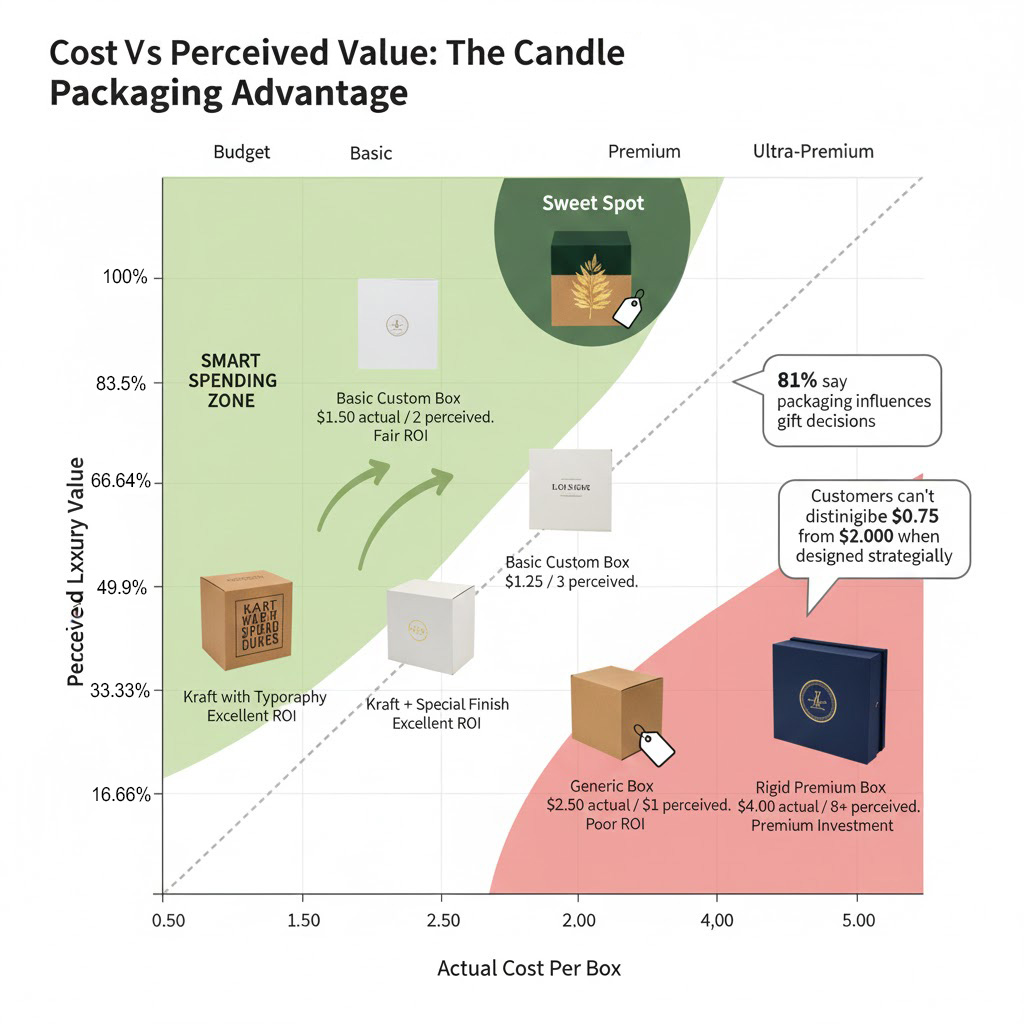
According to research from Ipsos, 81% of consumers say that packaging design influences their gift selection decisions, and two-thirds agree that paper and cardboard packaging makes products seem premium or high quality. But here’s the fascinating part: customers often can’t tell the difference between packaging that costs $2 per unit versus packaging that costs $0.75 per unit when the right design choices are made.
The gap between perceived luxury and actual cost is where smart candle makers are building their competitive advantage. Let’s explore exactly how to exploit that gap.
🎨 Design Choices That Add Zero Dollars But Maximum Impact
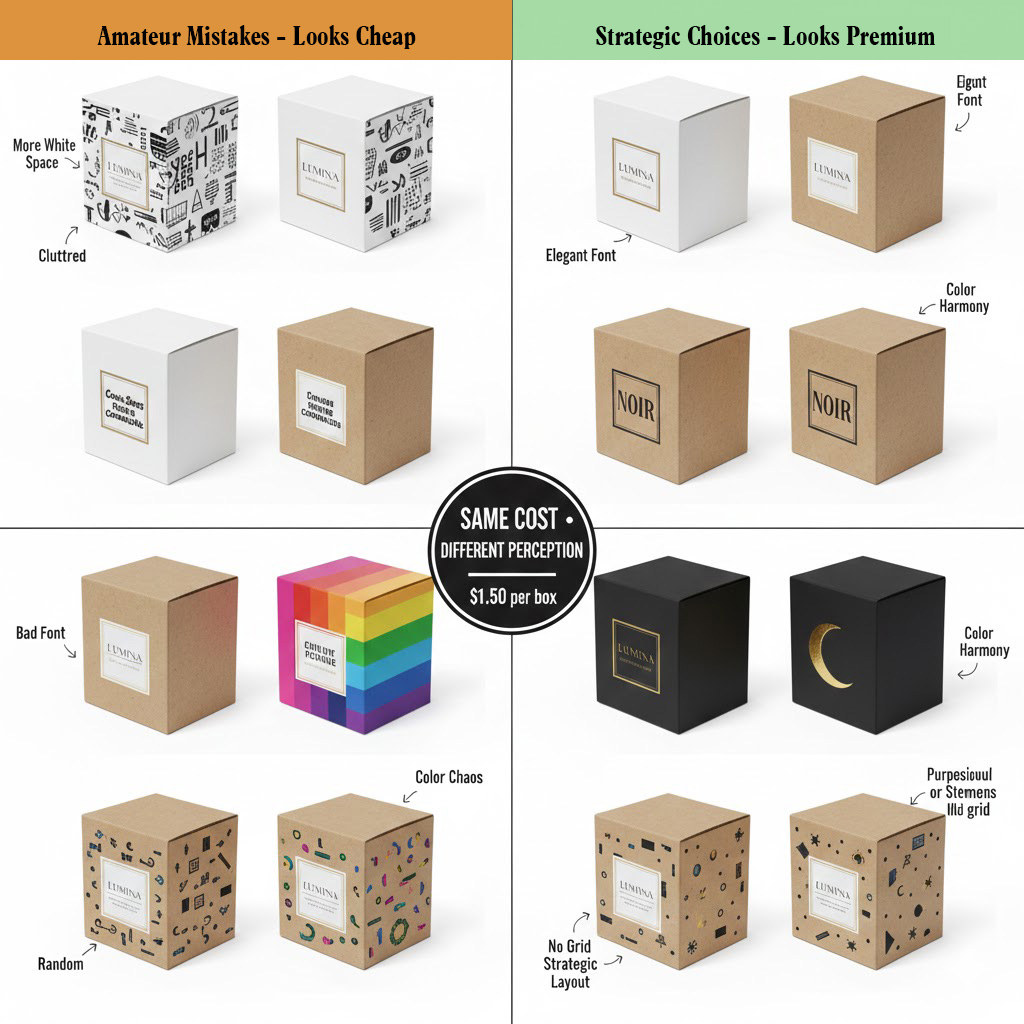
The single most powerful thing you can do for your packaging budget? Make smart design decisions that create a premium appearance without premium costs.
The Power of Strategic White Space
One of the biggest mistakes budget-conscious candle makers make is trying to fill every inch of their packaging with design elements. They think more design equals more value. It’s actually the opposite.
Luxury brands understand that white space (or negative space) signals confidence and sophistication. When your packaging has room to breathe, it automatically looks more expensive. This costs you absolutely nothing—in fact, it often costs less because you’re using less ink.
Consider these approaches:
- Minimalist label placement – A single, well-placed label can look more premium than an all-over print
- Strategic text hierarchy – One elegant font in two sizes beats five different fonts every time
- Breathing room around logos – Give your brand mark space to shine
- Unprinted areas – Natural kraft or white space can be your most powerful design element
Typography as Your Secret Weapon
Here’s something the luxury packaging world has figured out: the right typography can make cheap materials look expensive, while the wrong typography can make expensive materials look cheap.
You don’t need to license expensive custom fonts. You need to choose fonts strategically:
- Serif fonts suggest heritage and craftsmanship (think: Playfair Display, Libre Baskerville)
- Clean sans-serifs communicate modern sophistication (Montserrat, Poppins)
- Hand-lettered scripts work for artisanal brands but use sparingly
- High contrast between heading and body text creates visual hierarchy
The secret? Stick to one or two fonts maximum. Consistency looks premium. Font chaos looks amateur, no matter how much you spent on the box.
Color Psychology on a Budget
Full-color printing across your entire box costs more. But limiting your color palette doesn’t mean limiting your impact—it often enhances it.
Single-color or two-color designs can look incredibly sophisticated when done right:
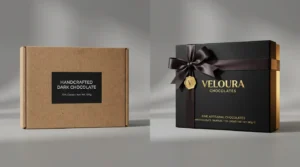
- Black on kraft – Timeless, eco-conscious, surprisingly premium
- White on navy or forest green – Instantly upscale
- Metallic gold or silver – Used sparingly as an accent, not everywhere
- Monochromatic schemes – Different shades of one color create depth
Ray Packaging’s design team specializes in helping candle makers create high-impact designs that work within budget constraints. They’re not just order-takers—they’re strategic partners who understand the visual psychology of gift packaging.
📦 Material Selections That Look Premium Without the Premium Price Tag
The material your packaging is made from sends immediate signals about your product’s value. But here’s the good news: some of the most luxurious-looking materials are actually among the most affordable.
The Kraft Paper Revolution
Remember when kraft paper packaging looked cheap and eco-friendly in that apologetic, hippie-dippy way? Those days are over. Modern kraft packaging has been reclaimed by luxury brands, and for good reason.
Here’s why kraft paper is your budget-friendly secret weapon:
- Natural texture adds tactile interest without extra cost
- Sustainability story resonates with gift buyers (they feel good about their purchase)
- Versatile base that works with minimal printing for maximum impact
- Forgiving material that hides minor imperfections better than glossy white
The key is treating kraft as an intentional design choice, not a cost-cutting compromise. Pair it with the right design elements and it absolutely reads as premium.
Rigid Boxes vs. Folding Cartons: Making the Right Choice
You’ve probably assumed that rigid boxes (the type with separate tops and bottoms) are out of your budget. Sometimes that’s true. But not always—and there are creative middle-ground solutions.
When to invest in rigid boxes:
- Higher-priced candles ($35+) where the box cost is proportionally smaller
- Holiday gift sets or special editions with higher margins
- Products where the box doubles as permanent storage
When folding cartons are the smarter choice:
- Everyday product lines with moderate pricing
- High-volume sales where per-unit cost matters most
- Situations where decorative outer sleeves can elevate standard boxes
The Middle Ground: Hybrid Solutions
This is where creativity saves you money. Consider these approaches:
- Standard folding carton with a belly band – Adds that unwrapping moment for pennies
- Two-piece design with textured paper – Feels premium without rigid construction
- Window cutouts – Show off your beautiful candle while adding perceived value
- Nested boxes – Outer shipping box that’s gift-ready eliminates wrapping needs
Ray Packaging specializes in these hybrid solutions that give you the premium unboxing experience without the rigid box price tag. It’s about understanding packaging engineering, not just printing.
✨ Low-Cost Finishing Touches That Create High-End Perception
Here’s where the magic really happens. Small finishing touches can transform ordinary packaging into something that feels special, and many of these additions cost far less than you’d think.
Strategic Use of Special Finishes
You don’t need foil stamping across your entire box. You need it in exactly the right place.
Budget-friendly finishing options:
- Spot UV coating – Creates glossy/matte contrast on specific elements only
- Embossing or debossing – Adds tactile dimension to your logo or key text
- Metallic ink – More affordable than foil, still creates shimmer and luxury appeal
- Matte lamination – Soft-touch feel that immediately signals quality
The key is restraint. One well-placed special finish creates more impact than multiple finishes competing for attention.
The Power of Simple Embellishments
Sometimes the most effective finishing touches aren’t printed at all—they’re added elements that create that gift-ready moment:
- Tissue paper in your brand color (costs pennies per sheet)
- Twine or ribbon tied around the box (classic and affordable)
- Wax seal stickers on the box closure (surprisingly inexpensive in bulk)
- Thank you cards or product story inserts (builds connection while adding layers)
According to consumer research, packaging that includes even one extra touchpoint—like tissue paper or a card—is perceived as 47% more valuable than identical packaging without those elements. That’s massive ROI for minimal investment.
Custom Labels vs. Full-Box Printing
Here’s a cost-saving approach many successful candle brands use: instead of fully printed custom boxes, they use high-quality stock boxes with stunning custom labels.
Why this works:
- Stock boxes cost a fraction of custom printed ones
- You can order smaller quantities of labels to test designs
- Easy to create seasonal variations without reprinting boxes
- Labels on kraft or white boxes can look incredibly sophisticated
Ray Packaging can help you source quality stock boxes and design labels that create a cohesive, premium look. Sometimes the smartest budget decision is knowing what not to customize.
🎁 Size and Structure Strategies That Maximize Perceived Value
The physical presence of your packaging—how it feels in someone’s hands, how it opens, its weight and dimensions—communicates value before a single word is read.
Right-Sizing for Impact
Oversized packaging isn’t always better, but strategic sizing can dramatically affect perception. Here’s what to consider:
The gift presence test:
- Will this look substantial under a tree or on a gift table?
- Does the box feel proportional to the price point?
- Is there intentional space around the candle, or does it look cramped?
Cost-effective sizing strategies:
- Add custom inserts – Kraft inserts cost very little but fill space beautifully
- Include product care cards – Takes up space while adding value
- Use internal fitments – Elevates the candle like jewelry in a display
- Leave intentional margin – Space around the candle reads as luxury, not excess
The Opening Experience
How your packaging opens is a micro-moment that sets the tone for the entire product experience. Small structural choices make a big difference:
- Magnetic closures – More affordable than you’d think for small runs
- Tuck-in flaps with a seal – Creates anticipation when breaking that seal
- Sleeve boxes – The sliding motion feels premium and sophisticated
- Lift-off lids – The ultimate reveal moment, often doable within budget
Multi-Functional Packaging
Want to justify a slightly higher packaging cost? Make the box useful after the candle burns down.
Ideas that work:
- Boxes designed for jewelry or small item storage
- Structures that become decorative bookends
- Flat-pack designs that can be repurposed as drawer organizers
- Keepsake boxes with that “too nice to throw away” quality
When customers keep your packaging, it’s free advertising sitting on their dresser or shelf. That’s long-term marketing value from a one-time packaging investment.
🌱 Sustainable Options That Look Expensive (Because They Are Valuable)
Here’s something fascinating: eco-friendly packaging materials often cost the same or less than traditional options, but they allow you to tell a value story that resonates deeply with gift buyers.
The Sustainability Premium Perception
Modern consumers—especially gift buyers—place genuine value on sustainable packaging. They’ll perceive your product as more premium when you can authentically claim environmental responsibility.
Affordable sustainable materials:
- Recycled paperboard – Often less expensive than virgin stock
- Soy or vegetable-based inks – Comparable cost to petroleum inks
- Water-based coatings – Sustainable alternative to plastic lamination
- FSC-certified papers – Communicates environmental stewardship
Communicating Your Sustainability Story
The materials alone aren’t enough—you need to tell the story. Simple statements on your packaging create value:
- “Fully recyclable packaging made from 100% post-consumer waste”
- “Printed with plant-based inks | Composts in 90 days”
- “FSC-certified materials supporting responsible forestry”
This costs you nothing to add but transforms perception. Gift buyers want to feel good about their purchases. Give them that story.
The Minimalist Eco-Luxury Aesthetic
There’s a reason brands like Aesop and Grown Alchemist use minimal, eco-conscious packaging—it’s become synonymous with sophisticated luxury. You can tap into this aesthetic at any budget:
- Natural kraft with minimal black printing
- Recycled paper with visible texture and fiber
- Simple typography and generous white space
- Hemp twine or cotton ribbon as the only embellishment
Ray Packaging is committed to offering sustainable options without forcing you to choose between your values and your budget. Their material selection includes options that check both boxes: environmentally responsible and financially accessible.
🚀 Working Smart With Your Packaging Partner
Here’s the real secret to affordable luxury packaging: it’s not just about what you buy, it’s about who you buy from and how you work with them.
Questions to Ask Before You Order
Don’t just accept the first quote you get. Ask questions that reveal whether your packaging partner truly understands small business needs:
- “What’s your actual minimum order quantity?” (Not the “standard” minimum—the real minimum)
- “Do you offer design consultation as part of your service?”
- “Can I order different quantities as I grow, or am I locked in?”
- “What finishes are available at my order volume?”
- “Do you have stock options I can customize with labels or minimal printing?”
The Ray Packaging Difference
Traditional packaging companies are built for enterprise clients with massive budgets and predictable reorder schedules. Ray Packaging is built differently—specifically for businesses like yours.
Here’s what that means practically:
- No prohibitive minimums – Order what you actually need, not what a factory requires
- Design expertise included – You’re not just buying boxes, you’re getting strategy
- Flexible reordering – Start small, scale up as you grow
- Quality materials at all order levels – Premium options available regardless of quantity
- Sustainable focus – Eco-friendly materials are standard, not premium add-ons
Test, Learn, Iterate
With lower minimums, you can do something revolutionary: test your packaging before committing to huge quantities.
Smart testing strategies:
- Order a small batch with one design approach
- Gauge customer reaction and social media response
- Refine based on feedback
- Scale up with confidence
This iterative approach is impossible with traditional packaging minimums. It’s exactly why working with a partner like Ray Packaging changes the game for small candle businesses.
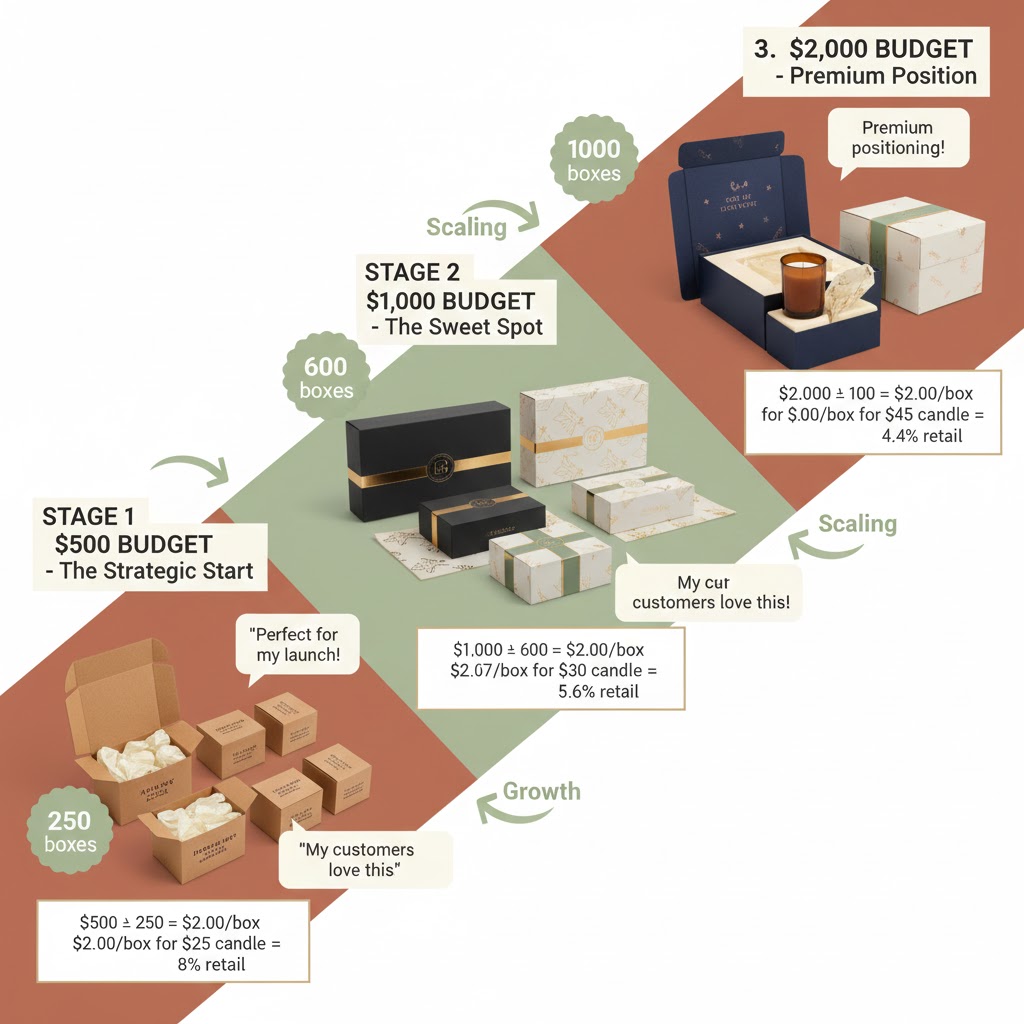
💡 Real-World Budget Breakdowns: What $500, $1000, and $2000 Can Get You
Let’s get specific. Here’s what affordable candle gift packaging actually looks like at different budget levels when you’re working with the right partner.
The $500 Starting Point
What you can achieve:
- 200-300 custom folding cartons with single-color printing
- High-quality kraft material with your logo and essential info
- Tissue paper inserts in brand color
- Design support to maximize impact with minimal elements
Best for: Testing your first custom packaging or seasonal limited editions
The $1000 Sweet Spot
What you can achieve:
- 500-750 boxes with two-color printing
- One special finish (spot UV or embossing on logo)
- Custom tissue paper or branded belly bands
- Sustainable materials with environmental messaging
Best for: Established product lines with proven demand
The $2000 Investment
What you can achieve:
- 1000+ premium boxes with full-color printing options
- Multiple finishing techniques (metallic inks, embossing, soft-touch coating)
- Custom interior fitments or inserts
- Coordinated outer shipping boxes that eliminate need for additional gift wrap
Best for: Scaling businesses ready to make packaging a competitive advantage
The key insight? Even at the lower tiers, you can create packaging that looks significantly more expensive than these price points would suggest. It’s about making strategic choices, not just having a bigger budget.
🎯 Putting It All Together: Your Action Plan
You’ve absorbed a lot of information. Now let’s turn it into action.
Start With These Three Questions
Before you reach out to any packaging supplier (including Ray Packaging), get clear on these fundamentals:
- What’s your actual price point? – This determines appropriate packaging investment
- Who’s buying your candles? – Gift buyers have different needs than personal-use customers
- What’s your brand promise? – Your packaging should reinforce, not contradict, your positioning
Prioritize Your Packaging Elements
You probably can’t implement every strategy we’ve discussed immediately. Here’s how to prioritize:
Tier 1 (Do First):
- Clean, strategic design with proper typography
- Right-sized boxes that create gift presence
- One signature finishing touch that becomes your “thing”
Tier 2 (Add As You Grow):
- Special finishes like spot UV or embossing
- Custom tissue paper or branded inserts
- Hybrid packaging solutions with belly bands or sleeves
Tier 3 (Scale-Up Investments):
- Rigid box structures for premium lines
- Fully custom printing across multiple SKUs
- Complex multi-piece packaging experiences
Take the Next Step
The distance between your current packaging and packaging that positions you as a premium gift brand is probably smaller than you think. And more affordable than you’ve been told.
Ray Packaging is ready to have a real conversation about your specific situation—not just send you a generic quote. They’ll look at your budget, your brand, your goals, and help you identify the highest-impact choices for your specific circumstances.
Because here’s what they understand that traditional packaging companies don’t: small businesses with limited budgets aren’t a nuisance to work around. You’re exactly the clients who benefit most from expert guidance and flexible options.
📞 Ready to Create Packaging That Punches Above Its Weight?
You’ve spent months or years perfecting your candles. Your scents tell stories. Your ingredients are chosen with care. Your brand deserves packaging that reflects that quality without requiring a corporate budget.
Reach out to Ray Packaging today for a consultation. Come with your honest budget, your specific challenges, and your vision for where you want your brand to go. They’ll help you create affordable candle gift packaging that looks anything but budget-friendly.
Because in 2026, small budgets don’t have to mean small impact. They just require smarter strategies and the right partner.
❓ Frequently Asked Questions
What’s the minimum order quantity for custom candle gift boxes?
Ray Packaging offers flexible minimums starting as low as 100-250 units depending on the complexity of your design and finishing options. This is significantly lower than industry-standard minimums of 1,000-5,000 units, making custom packaging accessible for small businesses and allowing you to test designs before committing to large quantities.
How much should I budget for packaging per candle?
A good rule of thumb is 8-15% of your retail price for gift-quality packaging. For a $25 candle, that’s $2-$3.75 per box. However, economies of scale and smart design choices can often get you premium-looking packaging for the lower end of that range, especially when working with a partner who understands budget constraints.
Can I make cheap packaging look expensive?
Absolutely! Strategic design choices like maximizing white space, using premium typography, choosing kraft or textured materials, and adding one well-placed special finish can make affordable packaging look far more expensive than it actually costs. The key is sophistication through restraint, not trying to add every possible element.
Should I invest in packaging or product quality first?
This is a false choice—both matter immensely. However, if your candle quality is already strong, packaging is often the missing piece that transforms good products into gift-worthy purchases. Research shows that premium packaging can increase perceived product value by 40% and significantly boost repeat purchases, making it a strategic investment with measurable returns.