You’ve spent months perfecting your product. Your branding is on point, your marketing strategy is solid, and you’re ready to make waves in your industry. But here’s the thing—in today’s social media-driven marketplace, your product’s packaging might be even more important than the product itself.
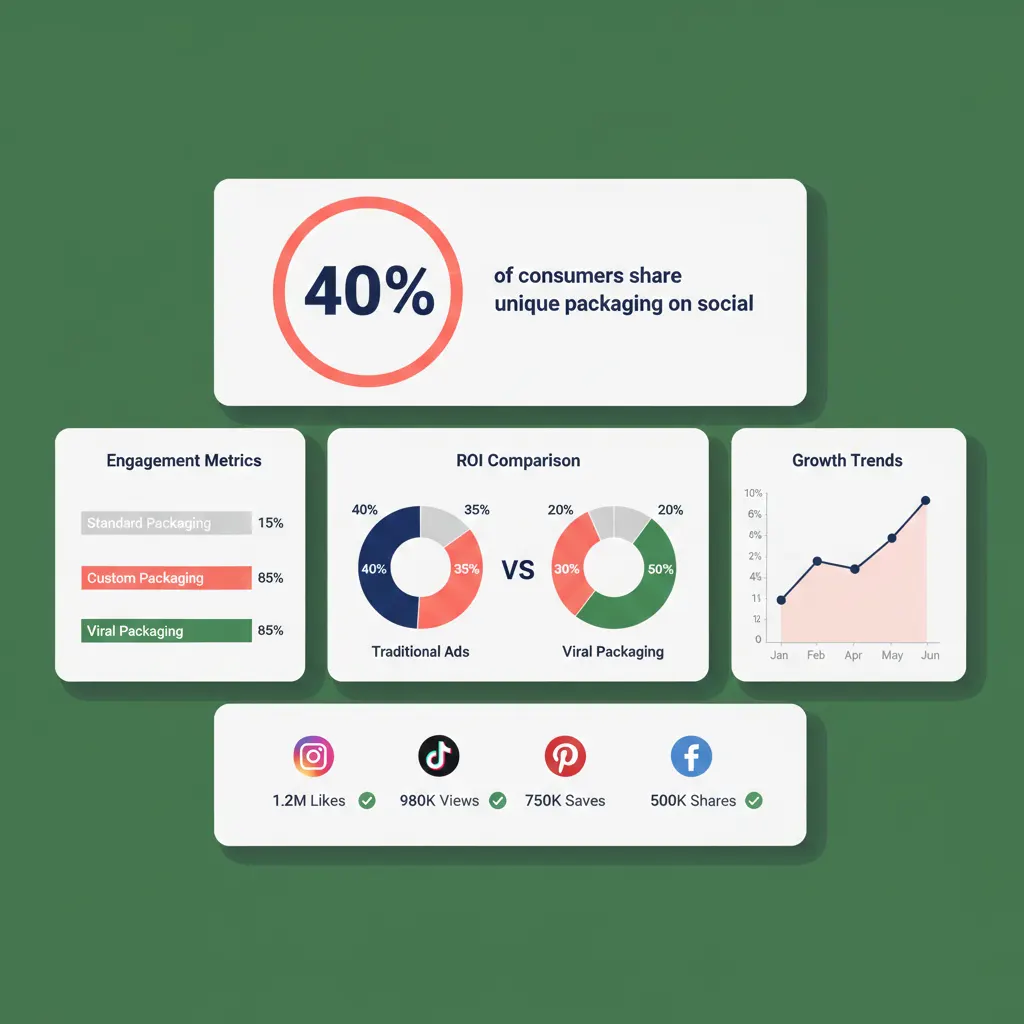
Sound dramatic? Consider this: 40% of consumers share images of packaging on social media if it’s unique or branded. That’s free advertising reaching thousands—sometimes millions—of potential customers. The brands crushing it right now aren’t just selling products; they’re creating unboxing experiences so compelling that customers can’t resist hitting “share.”
At Ray Packaging, we’ve seen firsthand how innovative custom printed boxes transform unknown brands into viral sensations overnight. The secret? It’s not about having the biggest marketing budget—it’s about thinking creatively and understanding what makes people stop scrolling.
Let’s dive into 10 game-changing custom box ideas that helped real brands explode on social media, and more importantly, how you can adapt these strategies for your own business.
🎨 The Psychology Behind Viral Packaging
Before we explore specific ideas, let’s understand why certain packaging designs spread like wildfire while others disappear into obscurity.
What Makes Packaging Shareable?
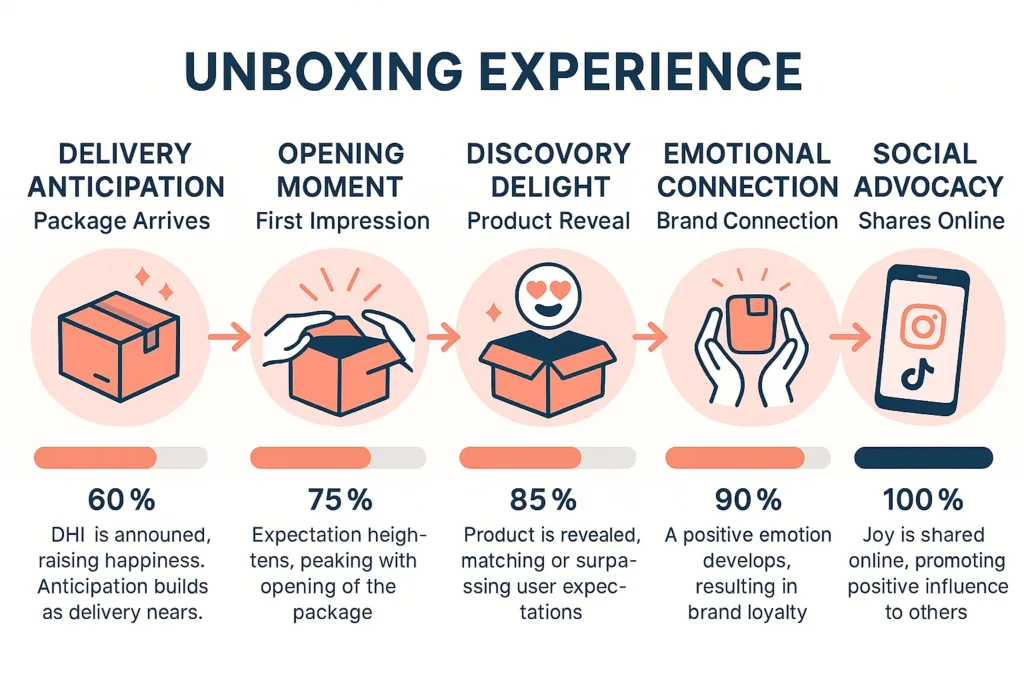
The most viral packaging creates an emotional response strong enough that customers feel compelled to document and share their experience. This happens when boxes trigger surprise and delight, aesthetic appeal that photographs beautifully, personalization that makes customers feel special, or storytelling that connects on a deeper level.
Your packaging competes with millions of other images in social feeds. To break through, it needs that “wow factor” within the first three seconds of opening.
The Unboxing Economy
Unboxing videos have evolved from a niche YouTube category into a multi-billion dollar influence sector. Beauty, tech, and lifestyle brands especially benefit from this phenomenon, but any product can create shareable moments with the right packaging approach.
The key insight? People don’t just buy products anymore—they buy experiences worth sharing. Your custom packaging boxes are the opening act of that experience.
💡 Idea #1: Hidden Messages That Reveal Themselves
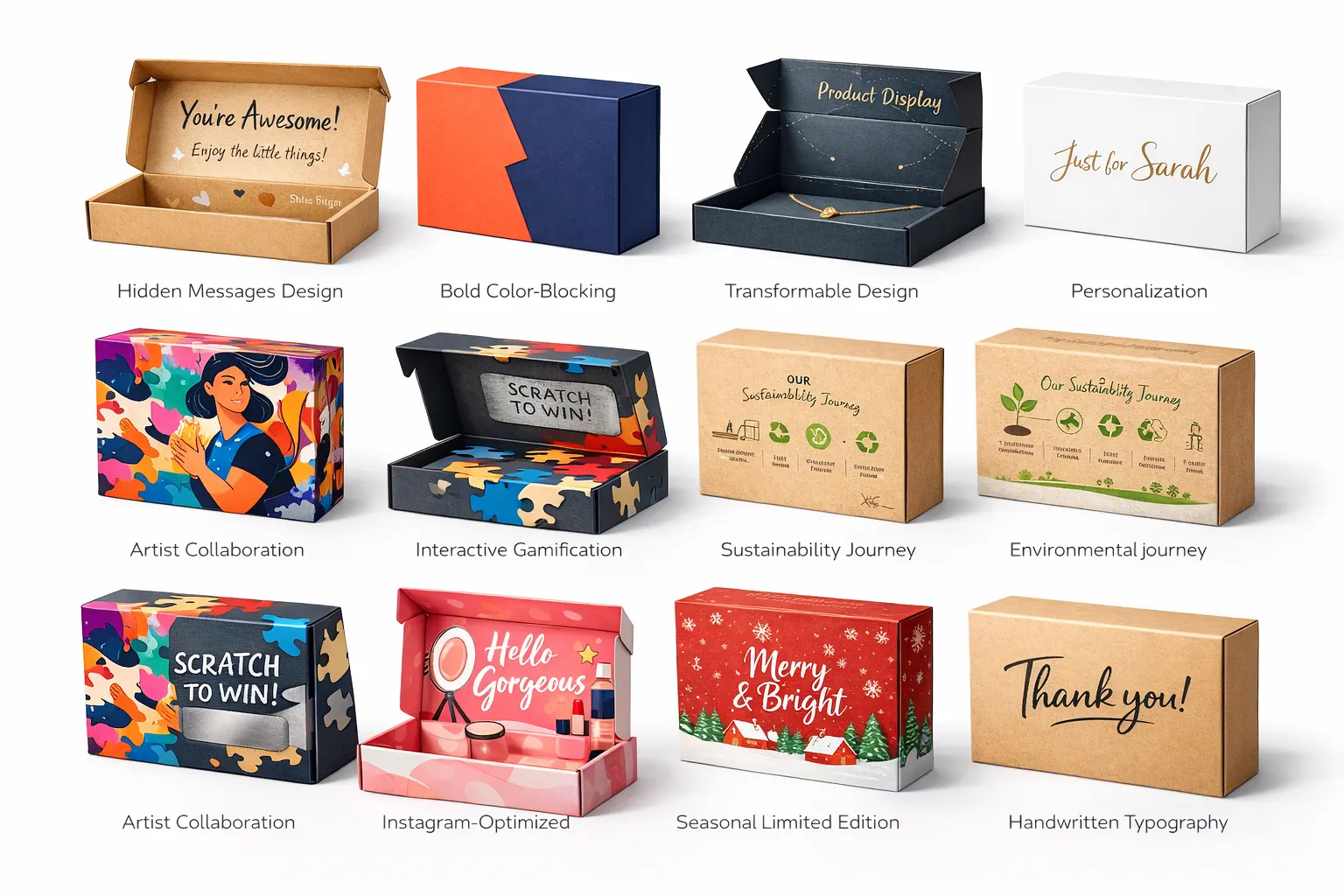
One skincare brand went viral by printing messages inside their boxes that only became visible after opening. The exterior looked elegant and minimalist, but inside, customers discovered hand-lettered affirmations, skincare tips, and even jokes printed on interior flaps.
Why This Works
Hidden elements create a treasure hunt feeling. Customers discover something unexpected, which triggers delight and the desire to share that discovery. The contrast between minimal exterior and detailed interior also photographs exceptionally well.
How to Implement This
Print your box exterior with clean branding, then add personality inside. Consider customer success stories printed on interior flaps, tips for using your product on the inside lid, “thank you” messages in multiple languages, or QR codes leading to exclusive content hidden in corners.
This approach works particularly well for subscription boxes, where repeat customers appreciate discovering new messages each month. The production cost remains relatively low since you’re utilizing space that typically goes unused.
🌈 Idea #2: Color-Blocking That Stops the Scroll
A coffee brand exploded on Instagram by creating custom boxes in unexpected color combinations—bright coral with deep navy, sunshine yellow with forest green, millennial pink with charcoal. Each flavor got its own bold color story that looked stunning in grid layouts.
The Visual Impact Strategy
Social media algorithms favor visually striking content. Bold color combinations immediately grab attention in crowded feeds. When customers post their unboxing photos, these distinctive colors make your brand instantly recognizable even without seeing the logo.
Making Color Work for Your Brand
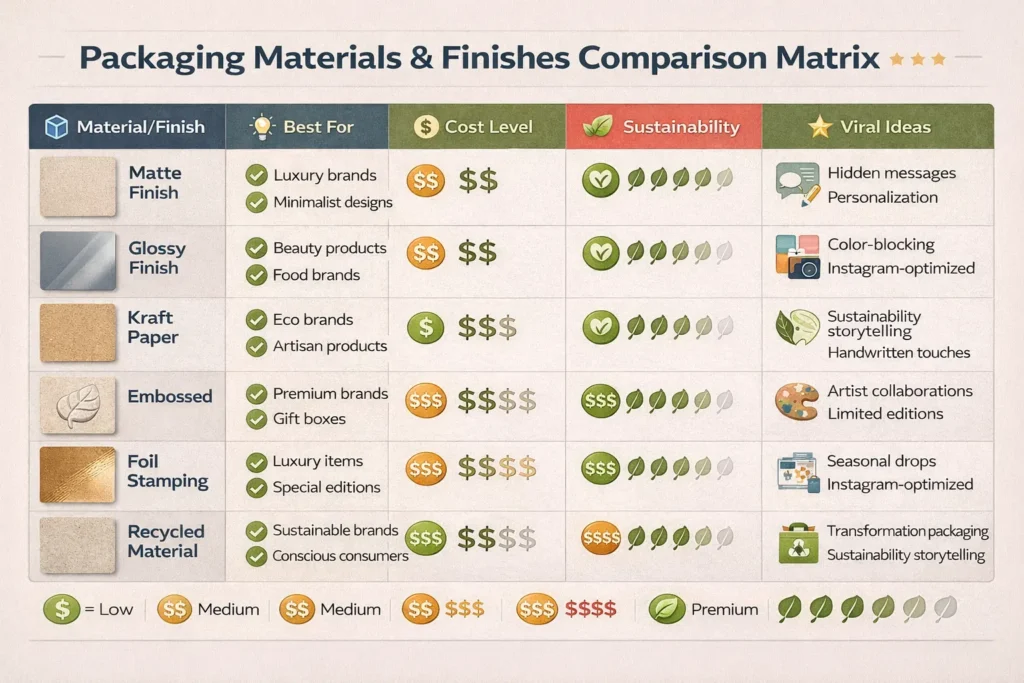
Choose colors that complement your product but aren’t necessarily “safe” choices in your industry. Test color combinations by photographing samples in natural light—the way customers will photograph them. Pay attention to how colors appear on different skin tones if customers will hold boxes in photos.
Consider creating limited edition color variations seasonally. This encourages repeat purchases and gives customers reasons to post multiple times as their collection grows.
📦 Idea #3: Packaging That Transforms Into Something Useful
A jewelry brand created gift boxes that unfolded into display trays. Customers didn’t throw away the packaging—they kept it on their dressers, with the brand logo visible daily. Social media filled with photos of these repurposed boxes styling vanities and shelves.
The Sustainability Angle Meets Functionality
Modern consumers feel guilty about packaging waste. When your box serves a secondary purpose, you solve that problem while extending your brand’s presence in customers’ lives. Every time they use that repurposed box, they’re reminded of your brand—and they’re likely to photograph it.
Transformation Ideas by Industry
For bakery products, design boxes that become serving platters for parties. For subscription boxes, create designs that stack into decorative storage. For artisan goods, design boxes that become display stands. E-commerce brands can create functional packaging that converts into organizers or desktop accessories.
The key is ensuring the transformed function is genuinely useful—not gimmicky. Customers see through forced functionality, but they’ll evangelize truly clever designs.
🎁 Idea #4: Personalization at Scale
A wellness brand incorporated customer names into their box designs—not as a sticker, but as part of the actual printed design. Each box felt like a custom gift, and customers shared photos tagging friends saying “look how special this brand made me feel.”
The Power of Individual Recognition
Personalization makes customers feel valued beyond being transaction numbers. When someone’s name appears on beautifully designed packaging, they feel special—and that emotional connection drives both loyalty and social sharing.
Making Personalization Affordable
Variable data printing technology makes personalization surprisingly accessible. You can print customer names, order numbers as design elements, custom messages based on purchase history, or location-specific designs for different regions.
Start simple with name personalization on interior tissue paper or insert cards. As your volume grows, explore more sophisticated personalization like custom illustration styles based on customer preferences.
🌿 Idea #5: Sustainability Storytelling Through Design
An eco-conscious brand printed their entire sustainability journey directly on their boxes—illustrations showing where materials came from, how much carbon they offset, and what customers could do with packaging after use. The educational approach went viral among environmentally conscious consumers.
Transparency as Marketing
Modern consumers, especially younger demographics, demand transparency about environmental impact. When you tell that story through your packaging design, you’re not just delivering a product—you’re inviting customers into your values and mission.
Design Elements That Communicate Sustainability
Incorporate visual timelines showing your material’s journey from source to box. Add infographics comparing your packaging’s environmental impact versus traditional options. Include clear, visual recycling or composting instructions with icons.
Use natural kraft paper that visibly showcases its eco-friendly material. Print with soy-based inks and mention it. Show, don’t just tell—if your box is biodegradable, include a “bury me in your garden” message with planting instructions.
🎨 Idea #6: Collaborative Artist Series
A fashion brand partnered with emerging artists to create limited edition box designs, with each artist’s work featured for one month. Customers collected different designs, artists promoted the collaboration to their followers, and the brand gained exposure to entirely new audiences.
The Cross-Pollination Effect
Collaborations multiply your reach by tapping into the artist’s or influencer’s audience. You gain credibility through association with respected creators, while they get a platform to showcase work and earn income.
Finding the Right Collaborators
Look for artists or designers whose aesthetic aligns with your brand but brings fresh perspective. Micro-influencers (10,000-100,000 followers) often provide better engagement than mega-influencers and are more affordable.
Consider local artists to strengthen community connections, diverse artists to reach different demographics, or customers who create fan art—turning them into brand ambassadors. Promote each collaboration as an event with clear timelines to create urgency and collectibility.
🔮 Idea #7: Interactive Elements and Gamification
A snack brand printed puzzle pieces on box panels—collect enough boxes and you could complete the puzzle. Another included scratch-off areas revealing discount codes or fun facts. The interactive nature turned packaging into entertainment.
Engagement Beyond the Purchase
Interactive packaging extends customer engagement beyond the moment of opening. Puzzles, games, or challenges encourage customers to purchase multiple times and share progress on social media.
Print “choose your own adventure” style stories across box panels, add scratch-off areas with surprise messages or discounts, or create augmented reality triggers where customers scan boxes with their phones to unlock digital content. The gamification strategy works especially well for subscription models where customers receive multiple boxes over time.
📸 Idea #8: Instagram-Optimized Inside Lid Designs
One beauty brand designed their display boxes with lids as perfect photo backdrops—coordinating colors, strategic logo placement, and even printed “lighting” effects that made products photograph beautifully. Customers naturally arranged products on the opened lid for photos, giving the brand free advertising in every post.
Designing for User-Generated Content
Think about your packaging as a photography prop. When customers photograph your product, what will appear in the background? If it’s your branded packaging, you’ve just earned prime real estate in their content.
Use solid colors or subtle patterns that don’t compete with products visually. Position logos where they’ll be visible but not overwhelming in photos. Print subtle grids or geometric patterns that help customers arrange products aesthetically.
Test your design by photographing products on the opened box in various lighting conditions. What looks perfect in design software might photograph poorly in natural light.
🌟 Idea #9: Seasonal and Limited Edition Drops
A candle company releases limited edition mailer boxes for every season and holiday, creating urgency and collectibility. Customers post comparison photos of their growing collection, effectively documenting their loyalty to the brand over time.
The Scarcity Principle in Action
Limited availability triggers FOMO (fear of missing out). When customers know a design won’t be available forever, they’re more likely to purchase now and share their acquisition on social media before designs change.
Create design themes for major seasons and holidays—not just obvious ones like Christmas, but also back-to-school, spring renewal, or summer adventures. Announce new designs weeks in advance with teasers and countdowns.
Consider creating “collector’s editions” where customers who purchase all seasonal variations receive something special. Limited editions also allow you to test bold design ideas with lower risk.
💌 Idea #10: Handwritten-Style Personal Touches
A small business went viral by including what appeared to be handwritten thank-you notes on the inside of every box lid. While actually printed, the personal script font and genuine message made customers feel individually appreciated—and they shared that feeling online.
Scaling the Personal Touch
You can’t handwrite notes for thousands of orders, but you can create that intimate feeling through thoughtful design. Script fonts mimicking handwriting, personal messages from the founder, or signatures printed strategically make mass-produced packaging feel boutique.
Print founder signatures on interior panels with brief personal messages. Use script fonts for short thank-you messages, but keep body copy in readable fonts. Include personal touches like “Packed with love by Sarah” with different team member names. Rotate messages so repeat customers see something new each time.
🚀 Turning Ideas Into Reality: Your Action Plan
These viral success stories share common threads: they understand their audience deeply, they’re not afraid to break industry conventions, they prioritize shareability in design decisions, and they view packaging as a marketing investment.
Start With Your Brand Story
Before implementing any creative packaging idea, clarify your brand narrative. What emotion do you want customers to feel when they open your box? What story are you telling? Which of these ideas aligns most authentically with your brand values?
Don’t chase trends that contradict your brand identity. A luxury brand forcing playful gamification feels inauthentic. A fun, youthful brand using overly serious minimalism misses the mark.
Test Before Scaling
Ray Packaging’s low minimum order quantities make testing creative ideas affordable. Order small batches of different designs, send them to loyal customers or brand ambassadors, and gather feedback before committing to large production runs.
Track which designs generate the most social media engagement. Monitor hashtags, comments, and shares. Ask customers directly—which packaging made them want to photograph and share?
Budget for Creativity
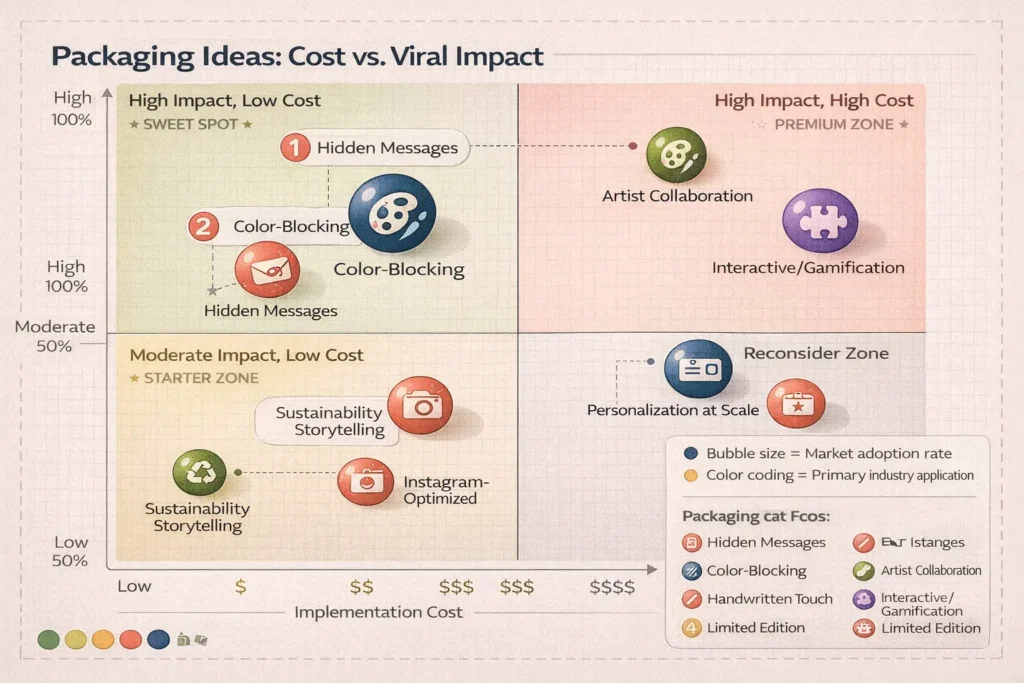
Innovative packaging might cost more per unit than basic boxes, but calculate the marketing value. If creative packaging generates even a fraction of the social media impressions you’d need to buy through traditional advertising, the ROI becomes clear.
Consider your packaging budget as part of your overall marketing spend, not just operational costs. A custom printed box that gets shared online provides ongoing advertising value long after the initial investment.
🤝 Why Ray Packaging Makes Creative Ideas Achievable
Bringing viral packaging ideas to life requires a partner who understands both design and production realities. Ray Packaging specializes in helping small to medium businesses create show-stopping custom boxes without enterprise-level minimums or budgets.
No minimum orders mean you can test bold ideas without committing to thousands of boxes upfront. Expert design support helps translate viral packaging concepts into print-ready reality. Fast turnaround times let you capitalize on trending moments or launch seasonal designs without six-month lead times.
Ready to create packaging so creative your customers can’t help but share it? Contact Ray Packaging today to discuss how we can bring your viral-worthy ideas to life.
❓ Frequently Asked Questions
How much does creative custom packaging typically cost compared to standard boxes?
Creative packaging costs vary based on complexity, but the difference is often less than you’d expect. Simple creative additions like unique color combinations or interior printing might add only 10-20% to basic box costs, while more elaborate features could add 30-50%. However, when you factor in the marketing value of shareable packaging, the ROI often exceeds traditional advertising spend.
What’s the minimum order quantity for testing creative packaging ideas?
Ray Packaging offers low minimum orders starting at 100 units for most custom designs, making it affordable to test creative concepts before scaling up. This flexibility lets you experiment with different ideas, gather customer feedback, and refine your approach without massive upfront investment.
How long does it take to design and produce custom viral-worthy packaging?
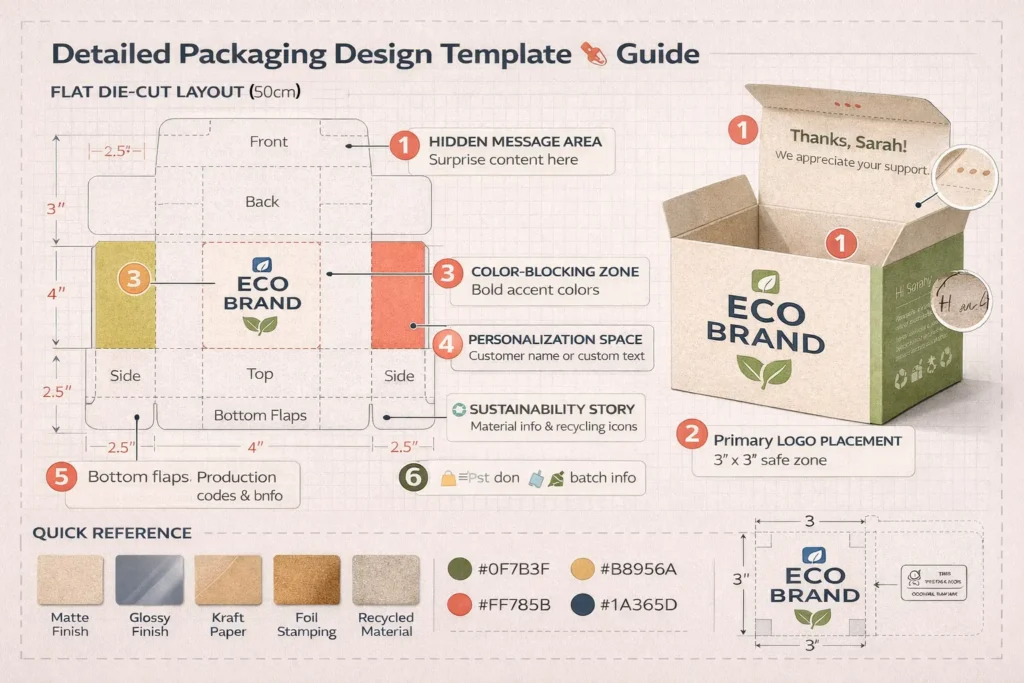
Timeline depends on design complexity and whether you’re starting from scratch or adapting existing templates. Simple custom designs can be produced in 1-2 weeks, while more elaborate concepts with special finishes might take 3-4 weeks. Ray Packaging’s design team streamlines the process by providing templates, technical guidance, and quick proofing cycles.
Which packaging idea has the highest chance of going viral for small businesses?
Personalization and sustainability storytelling tend to perform best for small businesses because they don’t require massive production budgets but create strong emotional connections. Hidden messages and Instagram-optimized designs also work well because they leverage existing customer behavior and add delight without significant cost increases.
Can I combine multiple viral packaging ideas in one design?
Absolutely! The most successful viral packaging often combines several elements—like sustainability storytelling with Instagram-optimized colors, or personalization with hidden messages. However, avoid overcrowding your design. Choose 2-3 complementary ideas that reinforce each other rather than competing for attention. Ray Packaging’s design team can help you find the right balance.