It’s mid-November, and your competitor just launched an advent calendar that’s selling out faster than you can refresh their Instagram page. Meanwhile, your standard holiday marketing—the email blasts, the social ads, the desperate discount codes—is generating the same lukewarm response it did last year.
You’re watching other brands turn advent calendars into viral sensations while simultaneously wondering: “How are they getting customers to pay $75 for what’s essentially packaging and samples?”
Here’s the truth that’s reshaping holiday marketing: custom advent calendar boxes aren’t just festive packaging anymore. They’re sophisticated brand-building tools that deliver 24 consecutive days of customer engagement—something no Instagram ad or email campaign can match.
The advent calendar market hit $1.34 billion in 2024, but the real story isn’t the size of the market. It’s who’s winning. Small businesses with tight budgets are outperforming major corporations by creating personalized calendars so distinctive that customers set reminders to buy them the instant they launch.
🤔 Why Traditional Holiday Marketing Keeps Failing You
You’re Spending More and Getting Less Every Year
Let’s talk about what’s actually happening with your holiday marketing budget. You’re watching costs climb while results decline, and you can’t quite figure out why the same strategies that worked three years ago barely move the needle now.
According to research from Forbes, the average person encounters between 6,000 to 10,000 ads daily during the holiday season. Your carefully crafted message is competing with thousands of others, all screaming for attention in the same crowded channels.
Here’s what that looks like for your business:
- Facebook ad costs spike 30-50% in November-December
- Email open rates plummet because everyone’s inbox is drowning
- Organic social reach drops to nearly invisible levels
- Customers have developed immunity to “Black Friday” urgency tactics
The traditional playbook is genuinely broken.
The Engagement Gap That’s Costing You Customer Loyalty
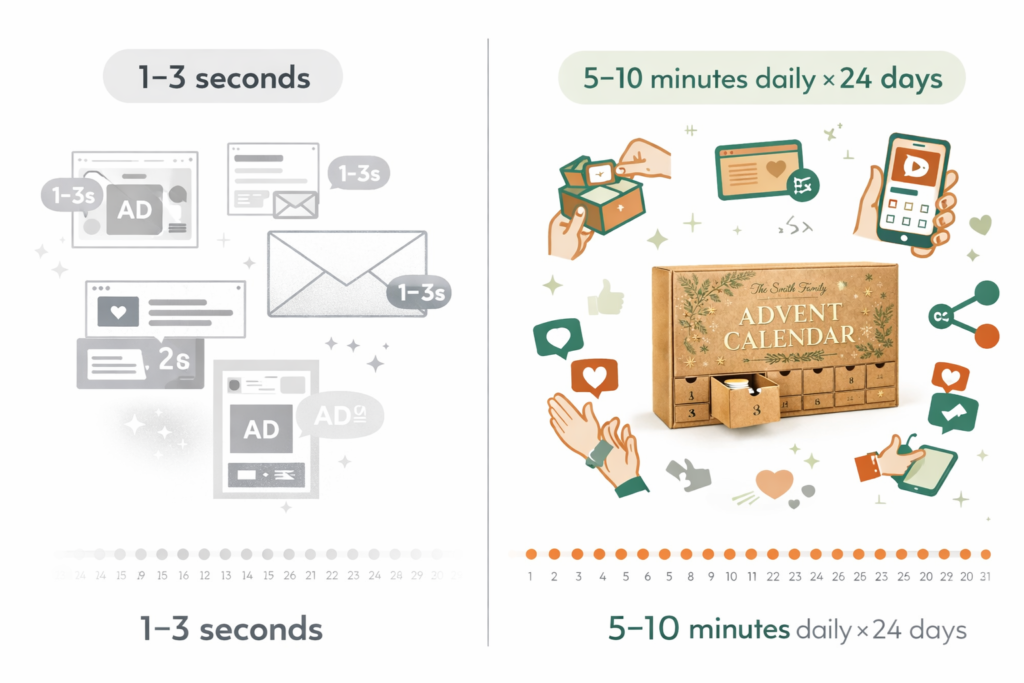
Here’s the metric nobody talks about: engagement duration. How long does a customer actually interact with your brand through traditional marketing?
- Social media ad: 1-3 seconds of attention
- Email marketing: 15-30 seconds if they open it
- Influencer mention: 5-10 seconds before scrolling continues
- Sponsored content: Maybe 30 seconds if compelling
Now compare that to personalized advent calendars: 24 days of daily, voluntary interaction. Five to ten minutes per day. Customers eagerly anticipating what’s next from your brand. That’s not marketing—that’s a relationship.
🎯 What Makes Personalized Advent Calendars the Ultimate Brand-Building Machine
You’re Buying Your Way Onto Customers’ Kitchen Counters for a Month
Here’s something most businesses miss: placement matters more than frequency. Would you rather appear in someone’s Instagram feed 100 times in December, or sit on their kitchen counter every single morning as they make coffee?
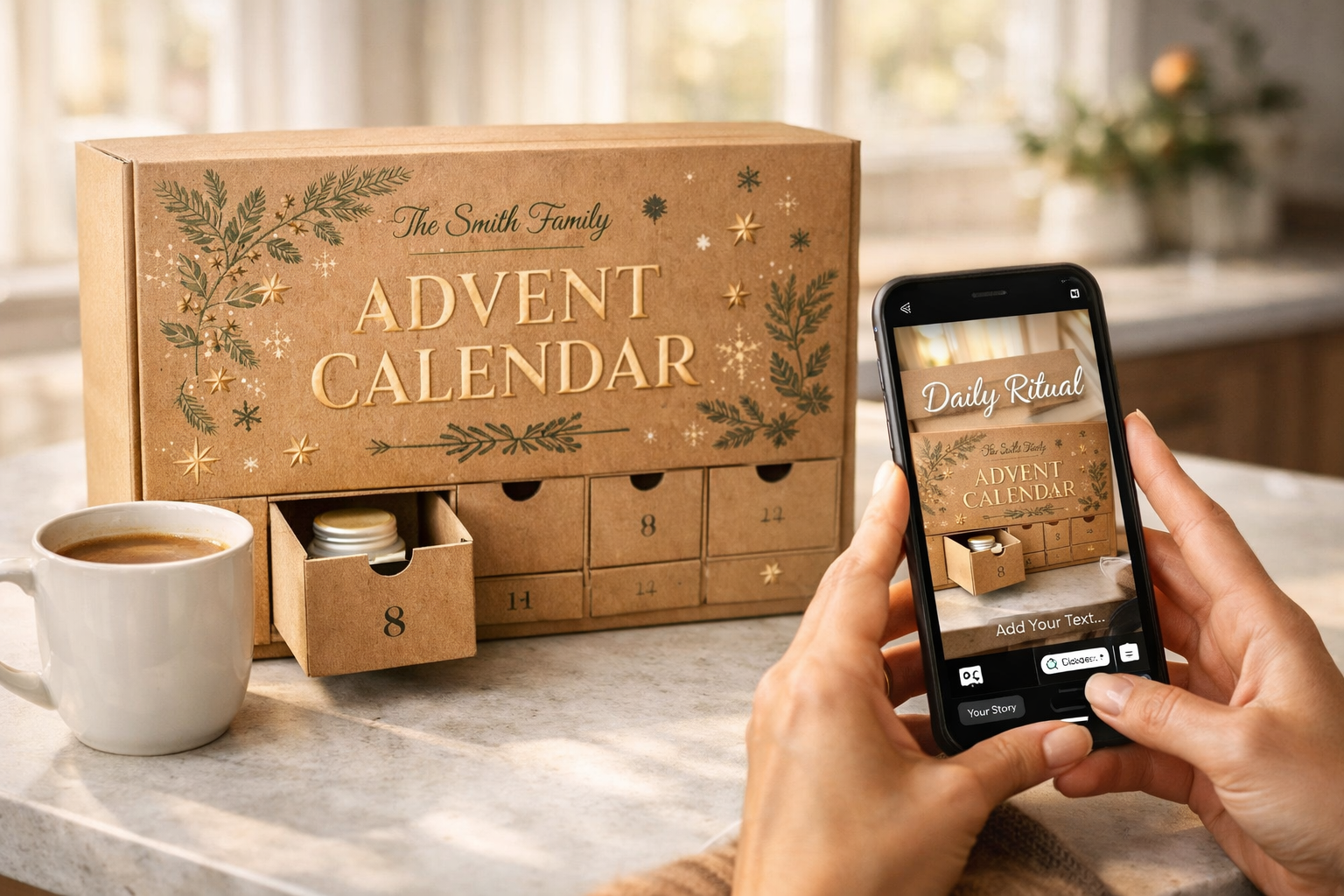
Personalized advent calendars don’t interrupt customers—they become part of their daily routine. Every morning for 24 days, they see your brand in their physical space. Your logo. Your colors. Your thoughtfully designed packaging.
This isn’t digital noise they can scroll past. It’s tactile, three-dimensional brand presence in their actual life. And they paid you for the privilege.
Your Calendar Becomes Content That Customers Create for You
When someone receives a beautifully designed, personalized advent calendar, they can’t help but share it. It goes on Instagram stories. It gets unboxing videos. It appears in Pinterest boards for “holiday gift ideas.”
Every share is an endorsement that money can’t buy. According to packaging industry research, distinctive seasonal packaging generates 3-5 times more social media shares than standard product packaging. Your customers become your marketing team—voluntarily, enthusiastically, and authentically.
The Keepsake Effect: Your Packaging Keeps Working After the Holidays
A well-designed advent calendar box becomes permanent storage in customers’ homes. They repurpose them as:
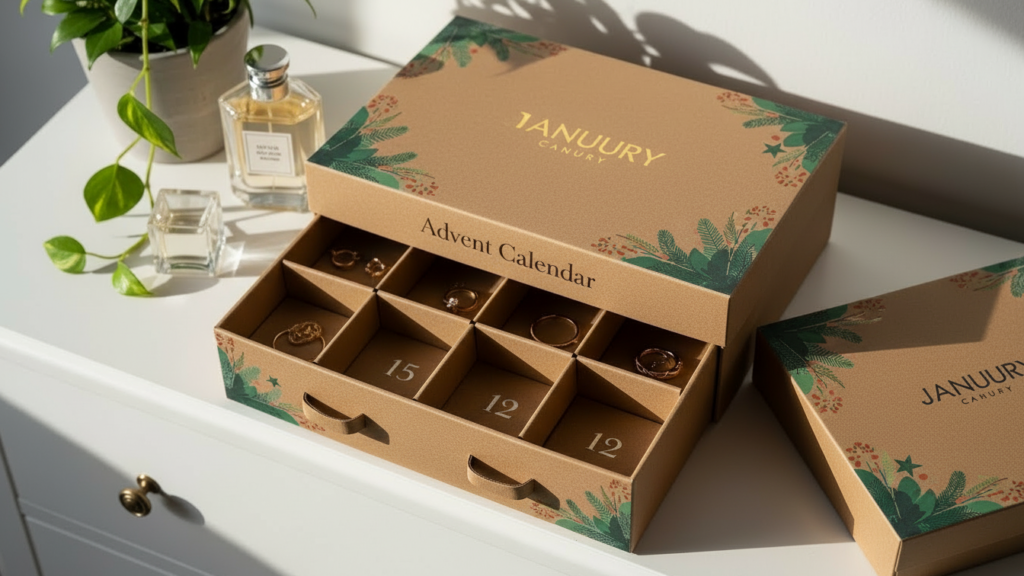
- Jewelry organizers with your brand visible every morning
- Desk organizers that coworkers see and ask about
- Memory boxes storing treasured items alongside your branding
- Photo displays with your logo subtly present
Every single time they use your repurposed packaging, they see your brand. That’s marketing reach that keeps delivering for months or years after purchase. Try getting that ROI from a Facebook ad.
🎨 How Personalization Transforms Generic Calendars Into Powerful Brand Assets
Your Brand Story Unfolds One Day at a Time
Generic advent calendars are just products. Personalized ones are storytelling opportunities disguised as packaging.
You control the 24-day journey customers take with your brand:
Days 1-5: Introduce who you are and what you stand for
Days 6-12: Showcase your product range or craft process
Days 13-18: Share customer stories or brand milestones
Days 19-23: Reveal what makes you different
Day 24: Create a memorable finale customers will remember all year
This narrative structure transforms passive consumption into active discovery. Customers aren’t just using your products—they’re learning why your brand deserves their loyalty.
Design Elements That Scream “This Is Us”
Personalization isn’t about slapping your logo on generic packaging. It’s about making every visual element distinctly, unmistakably yours.
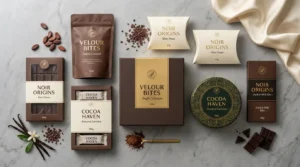
Your color palette dominates: If your brand is known for sage green and terracotta, that’s what customers see. The colors alone should make customers recognize your brand from across a room.
Your typography speaks your language: Playful handwritten fonts for casual brands. Elegant serifs for luxury positioning. Clean sans-serifs for modern minimalism.
Your structural choices reflect your values: A minimalist brand might choose a sleek large box advent calendar with hidden magnetic closures. An eco-conscious brand might select a sustainable cardboard advent calendar box with flat-pack assembly.
Every design decision either reinforces or contradicts your brand identity. Personalization means making intentional choices that all point in the same direction: authentically you.
Premium Materials That Communicate Value Before Opening
The moment someone receives your personalized advent calendar, they make immediate judgments about your brand based on how it looks and feels.
Premium materials signal premium brand:
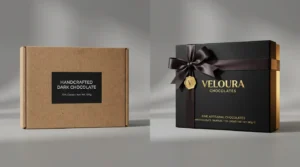
- Sturdy rigid boxes instead of flimsy folding cartons
- Matte or soft-touch finishes that feel expensive
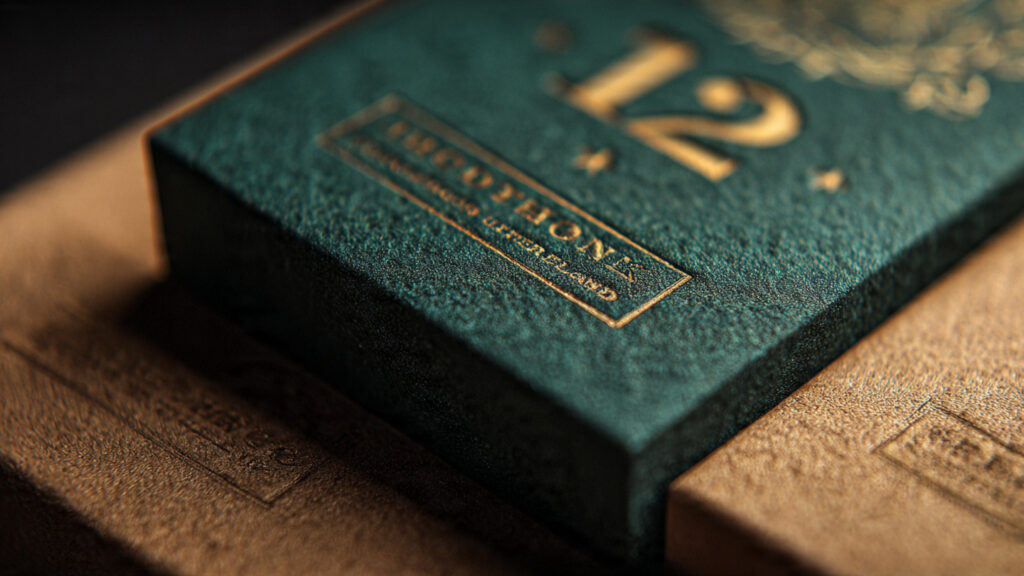
- Metallic accents that catch light and draw attention
- Embossed or debossed details that add tactile interest
- Quality paperboard that doesn’t bend during shipping
These details matter more than most businesses realize. Quality materials create subconscious trust that influences every subsequent interaction with your brand.
💼 Real Brands Using Personalized Advent Calendars to Solve Business Problems
“How Do I Get Customers to Try My Full Product Line?”
Beauty and skincare brands face a common challenge: they have 20-30 products, but customers typically buy the same 2-3 items repeatedly.
The personalized advent calendar strategy solves this. Each compartment contains a different product sample, strategically sequenced to introduce customers to your full range:
- Week 1: Foundation products everyone needs
- Week 2: Specialty items customers might not know they want
- Week 3: Complementary products that work together
- Week 4: Premium items that command higher prices
By December 25th, customers have tried your entire line. They’ve discovered new favorites they’ll buy full-size. You’ve turned a $75 calendar purchase into $200+ in future product sales.
“How Do I Build Buzz Without Influencer Budgets?”
Small businesses watch big brands pay influencers $5,000-$50,000 for holiday promotions and think “I can’t compete.” But personalized advent calendars are outperforming paid influencer content.
Why? Because customers trust peer recommendations infinitely more than paid promotions.
When your friend shows you the amazing advent calendar they bought and posts daily updates, that’s authentic enthusiasm. When an influencer does it, everyone knows it’s sponsored.
Personalized calendars that are genuinely special create organic word-of-mouth that generates influencer-style content without paying influencer prices.
“How Do I Stand Out in Retail Crowded With Competitors?”
If you sell through retail partners, you know the challenge: your products sit on shelves next to 10 competitors, all fighting for the same customers.
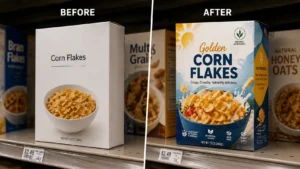
Personalized advent calendars give you massive shelf presence advantage during the most profitable selling season. While competitors have standard product displays, you have a commanding, visually distinctive calendar that draws attention from across the store.
Your personalized design ensures customers recognize it as uniquely yours, creating direct connection between the calendar and your other products nearby.
🛠️ How to Actually Make This Happen Without Going Broke
The Minimum Order Quantity Trap (And How to Avoid It)
Here’s where most small businesses hit a wall: they get excited about personalized advent calendars, contact packaging companies, and immediately hear “our minimum is 5,000 units.”
Quick math: 5,000 calendars at $30 each = $150,000 before you sell a single unit. For most small businesses, that’s impossible.
This is exactly why Ray Packaging built their business model for small brands. Their minimums start at 250-500 units—not 5,000.
The math becomes realistic:
- 300 calendars at $25 cost = $7,500 investment
- Sell them at $75 each = $22,500 revenue
- Net profit: $15,000 while running a month-long brand awareness campaign
That’s not a terrifying gamble. That’s a strategic test most businesses can absorb.
Getting Design Help That Actually Understands Small Business
Ray Packaging’s design team doesn’t just execute what you ask for—they help you figure out what you should be asking for:
They translate your brand into structure: “You mentioned your brand feels ‘cozy and nostalgic.’ Have you considered a book-style calendar?”
They prevent expensive mistakes: “Those compartment dimensions won’t fit your products. Let’s adjust before production.”
They maximize impact within budget: “Full-color printing will blow your budget. What if we use kraft paperboard with spot color printing on just the doors? Same impact, 40% lower cost.”
This consultation is included in working with partners who understand small business constraints.
Sustainable Materials That Don’t Look “Cheap Eco”
Modern sustainable packaging materials now rival traditional options in visual quality:
- Recycled paperboard indistinguishable from virgin stock
- FSC-certified papers with gorgeous textures
- Plant-based inks producing vibrant, rich colors
- Biodegradable coatings that protect without plasticky appearance
Ray Packaging offers these as standard options, not premium upgrades. Modern customers actively prefer sustainable packaging—it’s a feature they seek out and pay premium prices for.
The Timeline Nobody Tells You About (Until It’s Too Late)
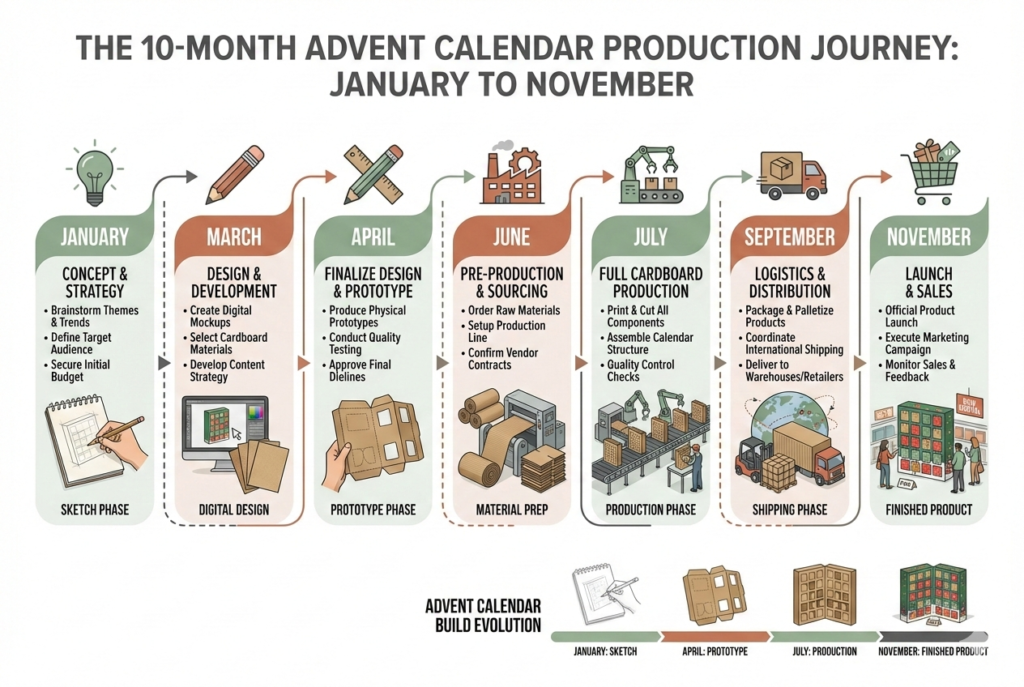
The realistic timeline for success:
January-February (10 months out): Concept development. Research competitors. Reach out to Ray Packaging for consultation.
March-April (8-9 months out): Finalize design concept. Choose materials. Approve mockups. Lock in production schedule.
May-June (6-7 months out): Design refinement. Sample production. Quality testing.
July-August (4-5 months out): Full production run. Quality control. Preparation for fulfillment.
September (3 months out): Product filling. Final assembly. Begin marketing teasers.
October (2 months out): Distribution. Launch marketing campaign. Open pre-orders.
November (1 month out): Peak sales. Social media engagement. Customer service.
Ray Packaging’s production planning helps you navigate this timeline without panic, compromise, or expensive rush fees.
📊 The Real ROI That Makes Personalized Advent Calendars Worth It
Why You Can’t Calculate ROI Like a Normal Product
Here’s where most businesses initially misunderstand advent calendar economics: they calculate ROI based purely on unit profitability and conclude “the margins aren’t worth it.”
But that calculation completely misses the marketing value.
Traditional Holiday Marketing Campaign:
- Social media ads: $3,000
- Email marketing: $500
- Influencer partnerships: $2,000
- Content creation: $1,500
- Total: $7,000 with $0 direct revenue
300 Personalized Advent Calendars:
- Production cost: $10,500 (300 × $35)
- Retail revenue: $22,500 (300 × $75)
- Net profit: $12,000 PLUS marketing value
The advent calendar generates $12,000 profit while delivering 7,200 total brand interaction days (24 days × 300 customers).
The Ripple Effects Nobody Counts (But Should)
Every personalized advent calendar creates value beyond the initial transaction:
Social sharing multiplier: The average distinctive advent calendar generates 5-8 social media posts from the buyer plus anyone who sees it displayed. That’s 1,500-2,400 organic brand impressions from 300 calendars.
Gift multiplication: Customers who love your calendar buy 3-5 more as gifts the following year. Your 300-unit test becomes 900-1,500 units in year two.
Product discovery engine: Customers who discover your brand through advent calendars convert to year-round customers at 3× the rate of those acquired through traditional advertising.
Press and features: Unique, personalized advent calendars generate media coverage and gift guide features that money can’t buy.
🎁 Your Action Plan to Launch Your Personalized Advent Calendar
Step 1: Define What Success Looks Like
Before touching design, get crystal clear on what you’re trying to achieve:
- Revenue goal: $20K? $50K? $100K+?
- Brand goal: Reach new customers? Deepen existing relationships? Reposition as premium?
- Strategic goal: Test new product category? Build email list? Generate content?
Your answers shape every subsequent decision.
Step 2: Choose Your Structural Format Based on Brand and Budget
The structure isn’t just practical—it’s brand expression:
Drawer tower: Communicates quality, premium positioning. Best for luxury skincare, fine jewelry. Investment: medium-high.
Book-style fold-out: Suggests storytelling, heritage. Best for brands with rich history. Investment: medium.
Modular cube system: Feels modern, playful, customizable. Best for contemporary brands. Investment: low-medium.
Flat-pack assembly: Demonstrates sustainability, creates engagement. Best for eco-conscious brands. Investment: low-medium.
Step 3: Design for Sharing, Not Just Using
Your calendar needs to be photographically compelling. Design checklist:
- Bold colors or sophisticated minimalism (avoid muddy middles)
- Clear brand identity visible from 10 feet away
- Interesting textures that photograph well
- Surprising details that reward closer inspection
- Shareable size (not awkwardly large)
If your mockup doesn’t make you think “I’d share this,” keep refining.
Step 4: Start the Conversation with Ray Packaging Now
Initial consultation helps you:
- Understand realistic timelines and deadlines
- Get accurate cost estimates for different design options
- Identify potential challenges before they become problems
- Reserve production capacity during peak season
The brands launching successful calendars next November are starting these conversations now.
📞 Turn Your Vision Into Your Most Successful Holiday Product
The advent calendar opportunity isn’t going away—but it is getting more competitive every year. The brands establishing strong presence now will be the ones customers actively hunt for each November.
You have a choice: watch other brands launch calendars that customers love while you stick to ineffective holiday marketing, or create a personalized advent calendar that becomes your most anticipated product launch every year.
Ray Packaging exists specifically to make this accessible to businesses exactly like yours. No impossible minimums. No generic templates. No navigating this complex process alone.
Your cardboard advent calendar box is waiting to be created. The only question is whether you’ll make it happen for this coming season or wait another year while competitors build the customer relationships you could have owned.
❓ Frequently Asked Questions
When should I start planning my personalized advent calendar if I want it ready for this year?
If you’re reading this in January-March, you’re in excellent shape for a November launch. If it’s April-June, you’re cutting it close but still feasible with Ray Packaging who understands tight timelines. After July, you’re looking at rush fees or better planning for next year. The sweet spot is 5-6 months before your intended launch, giving time for thoughtful design, quality production, and proper marketing buildup.
Can I test the market with a small run before committing to huge inventory?
Absolutely—Ray Packaging offers minimums starting at 250-500 units instead of the industry-standard 5,000+. Your first year is a test. Create a limited-edition run, gather feedback, measure engagement, then scale up for year two with confidence. Many successful advent calendar businesses started with just 250-300 units and now produce 5,000+ annually
What’s the biggest mistake businesses make with their first advent calendar
Starting too late and rushing production. This leads to compromised design, limited material choices, expensive rush fees, and inadequate marketing buildup. The second biggest mistake is designing for yourself instead of your specific customer. Your calendar should reflect what your target audience finds appealing and shareable, not what you personally prefer. Work with Ray Packaging to pressure-test your design.
How do I make my advent calendar stand out when everyone else is launching them too?
Stop trying to copy what big brands are doing and lean hard into what makes your brand authentically different. If you’re sustainable, make that obvious through materials and messaging. If you’re locally made, tell that story across 24 days. Generic “pretty box with products” won’t work—but personalized calendars that feel distinctly, unmistakably you will always find their audience because nobody else can be you.