You’ve nailed the recipe. Your chocolate is smooth, rich, and genuinely something to be proud of. But when it comes to packaging, you’re staring at a screen full of options — boxes, wrappers, pouches, tins – and you have absolutely no idea where to start.
Sound familiar? You’re not alone.
Choosing the right types of chocolate packaging is one of the most important decisions you’ll make for your brand. It affects how customers perceive your product, whether they’ll buy it as a gift, how well it survives shipping, and ultimately, whether they’ll come back for more.
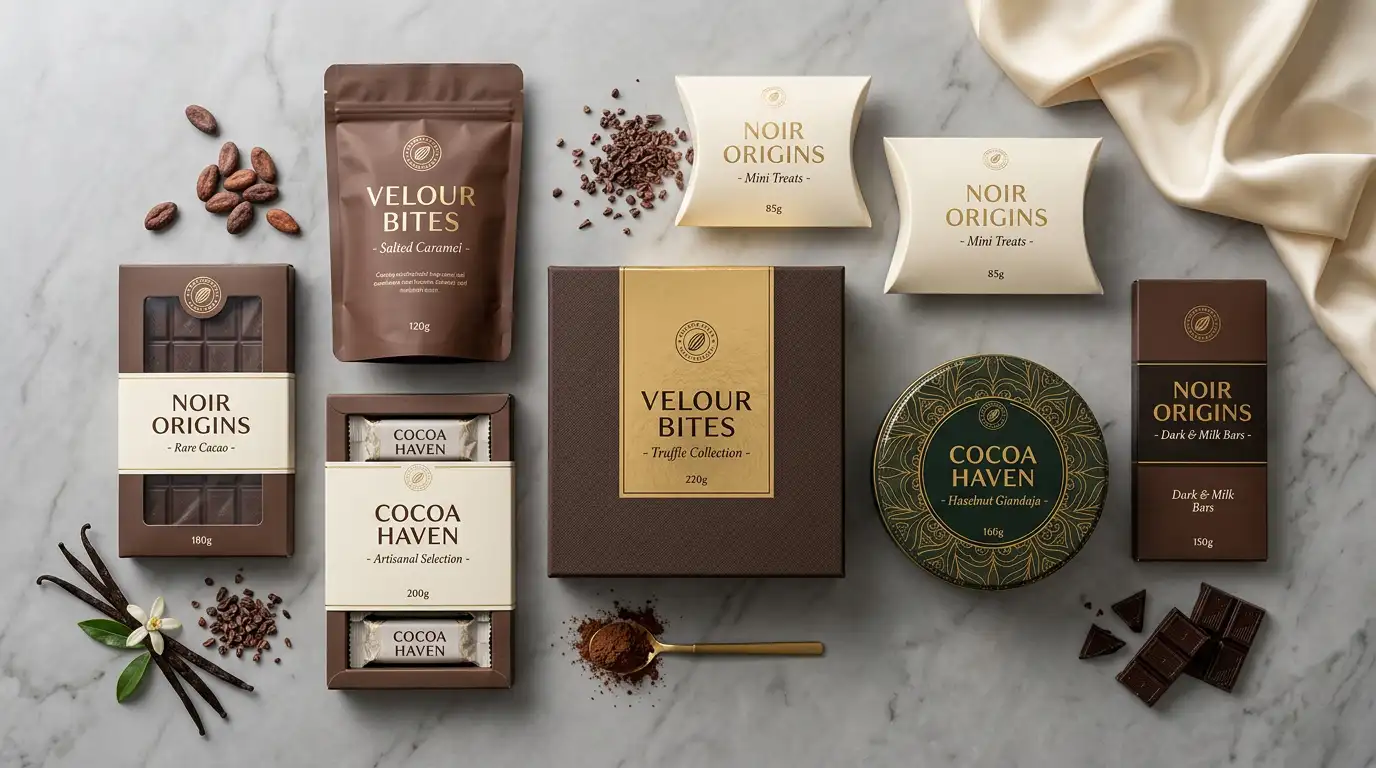
This guide breaks down the seven most popular types of chocolate packaging, explains exactly what each one does best, and helps you figure out which option – or combination of options is right for your brand.
🍫 Why the Type of Packaging You Choose Matters More Than You Think
Before we dive into the seven types, it’s worth understanding why this decision carries so much weight.
Packaging Is Part of the Product Experience
When a customer picks up your chocolate – whether in a shop, at a market stall, or when a parcel arrives at their door — the packaging is the first thing they interact with. It shapes their expectations before they’ve tasted a single piece.
A mismatched package can make even the finest chocolate feel ordinary. The right packaging, on the other hand, turns a simple bar into a premium experience worth sharing.
The Market Is Growing – and So Is the Competition
According to Statista, the global chocolate confectionery market is valued at over $140 billion in 2025 and is projected to grow at nearly 5% annually through 2030. More brands are entering the space every year, which means the packaging decision you make today directly impacts how visible and competitive your brand becomes tomorrow.
Your packaging needs to work hard – attracting attention, communicating quality, and building brand recognition across every touchpoint.
📦 The 7 Types of Chocolate Packaging Explained
Type 1: Folding Cartons
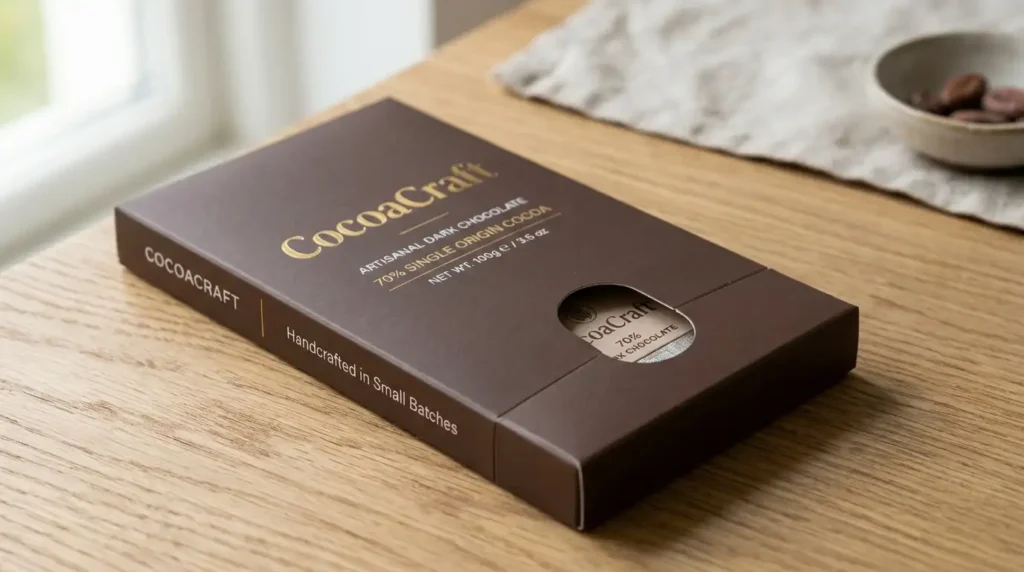
Folding cartons are one of the most versatile and widely used types of chocolate packaging on the market. They’re made from paperboard, printed flat, and folded into shape — making them easy to store, cost-effective to produce, and highly customisable.
Best suited for:
- Chocolate bars and tablets
- Single-serve gifting products
- Retail shelf display
- Subscription boxes and hampers
Folding cartons offer a fantastic canvas for branding. You have full surface area to work with front, back, sides, and inner flaps and they print beautifully with both bold graphics and fine detail. A matte finish with a spot UV logo can make a folding carton look just as premium as a rigid box at a fraction of the cost.
Why Small Brands Love Folding Cartons
They’re easy to assemble, flat-pack for storage, and can be ordered in small quantities without inflating your unit cost. For growing chocolate brands that are still testing products and refining their designs, folding cartons offer the flexibility to evolve without waste.
Type 2: Rigid Gift Boxes
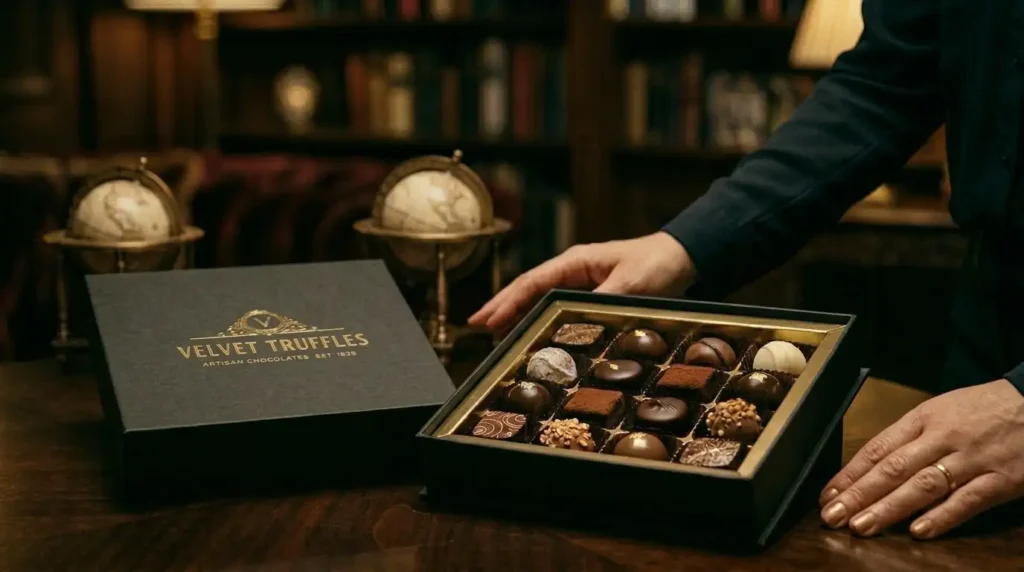
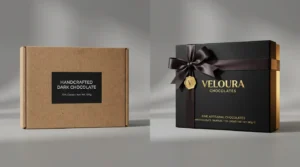
If your goal is to position your chocolates at the premium or luxury end of the market, rigid gift boxes are the go-to choice. Unlike folding cartons, rigid boxes are constructed from thick greyboard and don’t fold flat – they hold their shape and have a substantial, weighty feel that signals quality before the lid is even lifted.
Best suited for:
- Truffle and bonbon collections
- Corporate gifts and event favours
- Wedding and celebration gifting
- High-end retail and boutique stockists
The Unboxing Advantage
Rigid boxes create a natural unboxing moment. The lift-off lid, the reveal of the chocolates inside, the way the box feels in your hands – all of it contributes to a sensory experience that customers remember and talk about. In an age where gifting experiences matter as much as the gift itself, this is a genuine competitive advantage.
Customisation Options That Elevate the Perceived Value
Ray Packaging offers rigid gift boxes with a range of finish options that transform a standard box into something truly memorable:
- Magnetic closure for a satisfying snap
- Foil stamping in gold, silver, or rose gold
- Embossed or debossed logo detail
- Custom inserts and trays to hold chocolates securely in place
- Ribbon pulls for an effortless opening experience
Type 3: Pillow Boxes
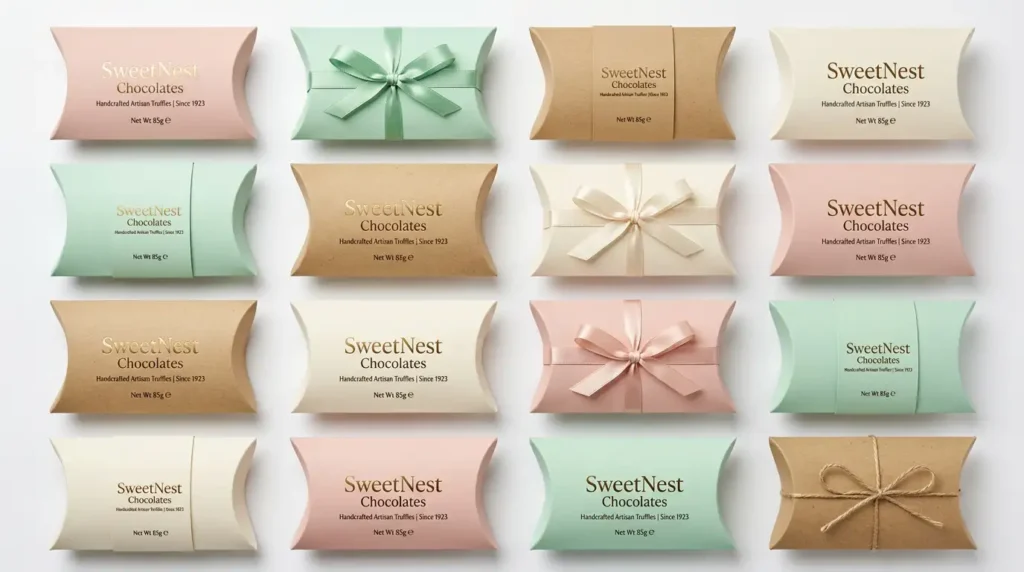
Pillow boxes are the packaging equivalent of a little treat – compact, charming, and perfect for smaller chocolate products. Their distinctive curved shape makes them instantly recognisable on a retail shelf or market display, and they assemble quickly with no adhesive required.
Best suited for:
- Single chocolates or small collections
- Impulse-buy items at point of sale
- Party favours and event giveaways
- Seasonal promotions and limited editions
When a Pillow Box Works Better Than a Flat Box
For low-cost, high-volume items where you need something that looks polished without a large packaging budget, pillow boxes punch well above their weight. Add a branded belly band or a simple ribbon and the effect is immediately boutique. They’re also a great option for seasonal ranges where you want variety without redesigning your entire packaging suite.
Type 4: Sleeve and Tray Packaging
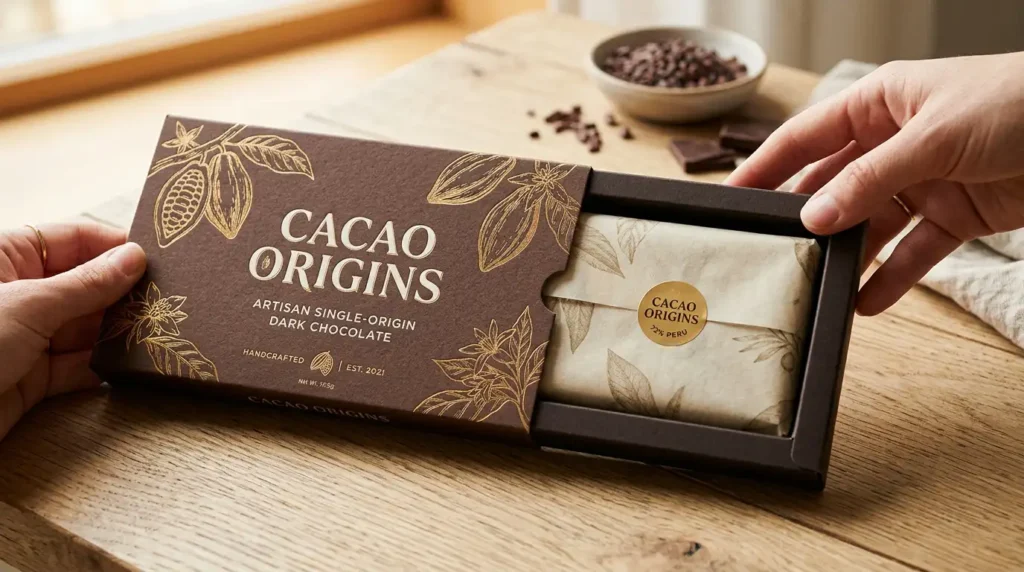
Sleeve and tray packaging combines a printed outer sleeve – which slides off to reveal a tray inside — to create a refined, layered reveal. This format has become increasingly popular among artisan and premium chocolate brands because it looks sophisticated, photographs brilliantly, and can be customised at relatively low cost.
Best suited for:
- Chocolate bars with a premium positioning
- Artisan and craft chocolate brands
- Gifting products where presentation matters
- Products sold both in-store and online
The Two-Part Effect
The sleeve acts as the brand’s billboard – it carries all the key messaging, design, and storytelling. The tray inside then holds the product securely. When a customer slides the sleeve off, there’s a small moment of anticipation that feels far more premium than simply opening a flap.
How It Performs Online
Sleeve and tray packaging also performs well for e-commerce because the sleeve provides additional structure and protection during transit. It’s a format that looks great in unboxing content, which makes it popular with brands that rely on social media and influencer marketing to drive awareness.
Type 5: Window Boxes
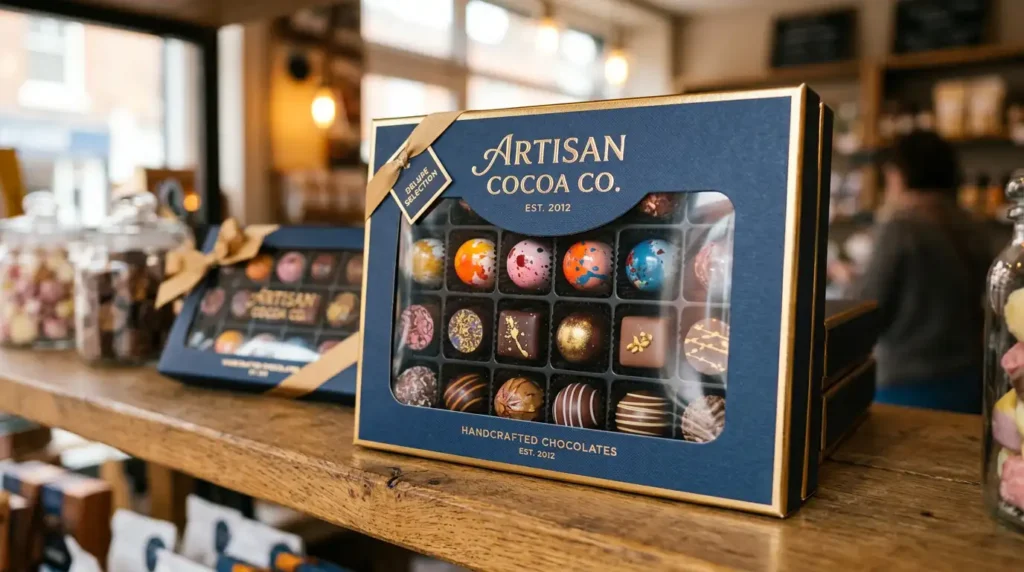
Sometimes the best selling point is the product itself – and that’s exactly where window boxes come in. A window box features a transparent acetate panel that lets customers see the chocolate inside before they buy.
Best suited for:
- Hand-decorated truffles and bonbons
- Layered or visually striking assortments
- Seasonal and gift products where presentation is the selling point
- Products sold in high-footfall retail environments
When to Let Your Chocolate Do the Talking
If you’re making hand-painted chocolates, layered pralines, or anything with a strong visual identity, hiding them inside a closed box is a missed opportunity. A well-placed window transforms your packaging into a display, turning casual browsers into buyers.
Eco-Friendly Window Alternatives
Traditional acetate windows are plastic-based, but sustainable alternatives now exist. PLA cellulose film — made from plant-based materials – offers a clear, compostable window option that’s increasingly popular with eco-conscious brands. Ray Packaging can advise on the best window material for your product and sustainability goals.
Type 6: Pouches and Stand-Up Bags
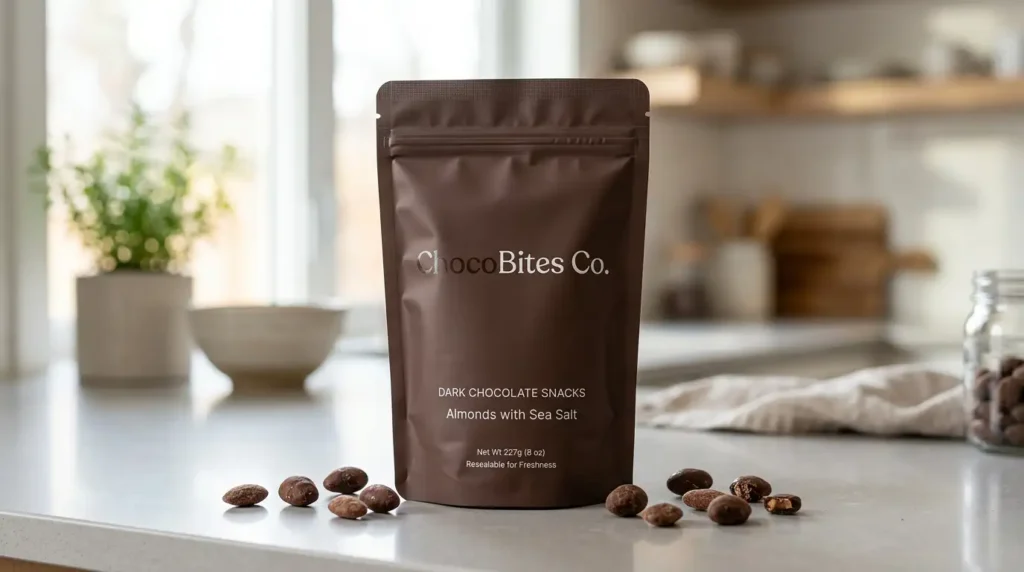
Pouches have become one of the fastest-growing packaging formats in the food industry – and the chocolate category is no exception. Stand-up pouches are resealable, lightweight, and offer a huge print area for bold branding.
Best suited for:
- Chocolate chips, buttons, and drops
- Chocolate-covered nuts, fruits, and snacks
- Bulk or sharing pack formats
- D2C (direct-to-consumer) brands and subscription boxes
Why Resealability Is a Bigger Deal Than You Think
Consumers increasingly expect resealable packaging, particularly for sharing or snacking products. A zip-lock or press-to-close pouch signals convenience and freshness — two things that matter enormously in the confectionery category. It’s a small detail that significantly improves the user experience and reduces the chance of a negative review about stale product.
Stand-Out on Shelf With Matte Pouches
Matte finish pouches with spot UV or foil accents have become a popular choice for premium chocolate brands. The contrast between the soft matte background and a gleaming foil logo creates a striking visual effect that stands out in crowded retail environments and photographs beautifully for social media.
Type 7: Tins and Metal Packaging
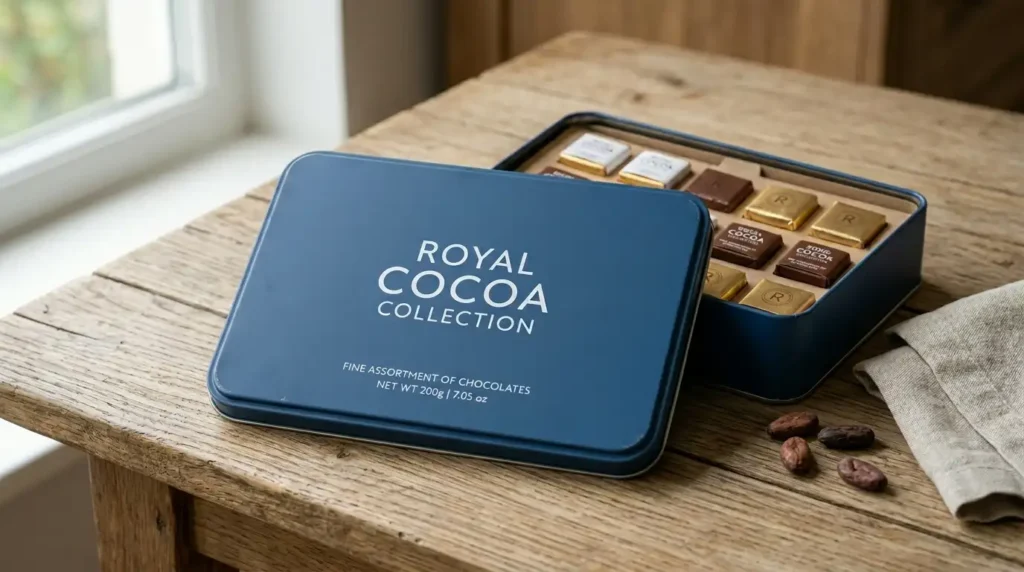
Tins occupy a unique position in the chocolate packaging landscape. They’re perceived as inherently premium, they’re reusable, and they carry strong associations with heritage, quality, and gifting tradition.
Best suited for:
- Luxury and collectible chocolate assortments
- Seasonal gifting (Christmas, Easter, Valentine’s Day)
- Corporate gifting and branded merchandise
- High-end retail and department store environments
The Reusability Factor
One of the biggest advantages of tin packaging is that customers keep it. A beautifully designed chocolate tin ends up on a desk, a shelf, or a kitchen counter – providing ongoing brand visibility long after the chocolates are gone. That kind of extended brand impression is difficult to replicate with any other packaging format.
When Tins Are Worth the Investment
Tins come at a higher price point than cardboard alternatives, so they work best when the retail price of your product supports the packaging cost. For premium gifting collections retailing above £20 or $25, tins can actually enhance the perceived value enough to justify a higher retail price — making them a smart commercial decision, not just an aesthetic one.
🎯 How to Choose the Right Type of Chocolate Packaging for Your Brand
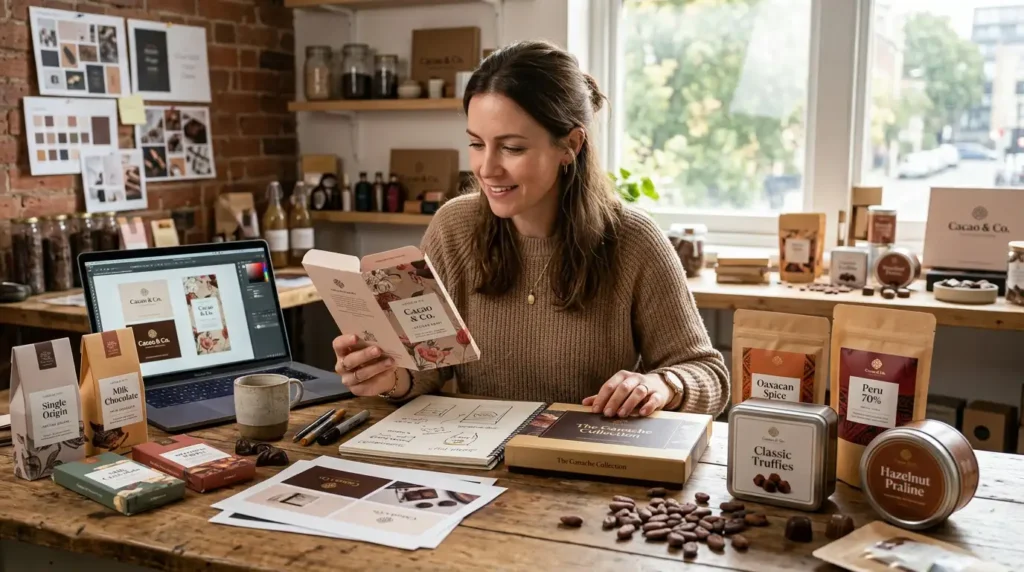
Now that you know the options, how do you decide? Here’s a simple framework to guide your thinking.
Step 1: Define Your Brand Positioning
Ask yourself honestly: where does your brand sit in the market? Are you:
- A mass-market product competing on value and accessibility?
- A mid-range brand with strong design sensibility?
- A premium or artisan brand where quality and experience are everything?
Your positioning determines the packaging formats that are appropriate and the finish level your customers will expect.
Step 2: Consider Your Sales Channels
Different sales channels have different packaging requirements:
- Retail and farmers’ markets – packaging needs shelf appeal and clear branding at a glance
- E-commerce – packaging needs to survive transit and create a great unboxing experience
- Corporate gifting – packaging needs to feel premium and professional
- Wholesale – packaging needs to be cost-effective and consistent at scale
Step 3: Think About Your Customer
Who is buying your chocolate, and why? A customer buying a box of truffles as a birthday gift has entirely different expectations from someone grabbing a snack bar at a coffee shop. Design your packaging around the buying moment, not just the product.
Step 4: Set a Realistic Budget
Packaging costs vary significantly by format, material, finish, and quantity. The good news is that with Ray Packaging’s no minimum order policy, you don’t have to overcommit to a large run before you’ve tested your market. Start with a smaller quantity, see how your customers respond, and scale up with confidence.
✅ A Quick Decision Guide: Which Packaging Type Is Right for You?
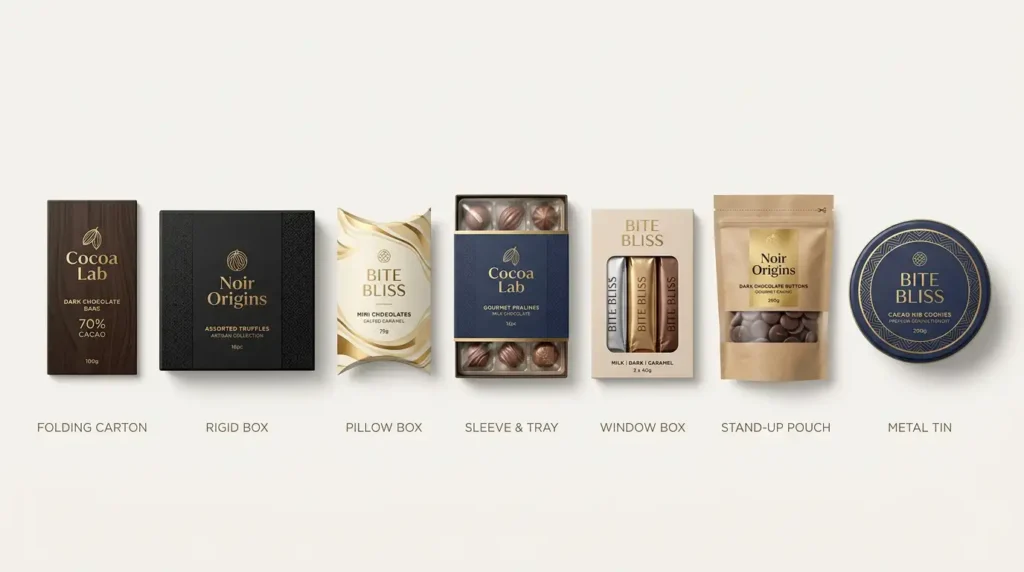
Use this summary to match your product and goals to the right format:
- Folding cartons – best all-rounder for bars, retail, and growing brands
- Rigid gift boxes – best for premium, gifting, and luxury positioning
- Pillow boxes – best for impulse buys, events, and small collections
- Sleeve and tray – best for artisan brands and e-commerce-first products
- Window boxes – best for visually stunning products that sell themselves
- Pouches and stand-up bags – best for snacking formats and D2C brands
- Tins – best for seasonal, collectible, and high-end gifting ranges
Why Ray Packaging Is the Right Partner for Your Chocolate Brand
Choosing the right chocolate packaging type is only half the challenge. Finding a supplier who can deliver it at the quality, quantity, and speed your business needs — that’s the other half.
At Ray Packaging, we work with chocolate brands at every stage of growth, from first-time makers to established producers looking to elevate their packaging. We offer:
- No minimum order requirements — so you can start small and scale smart
- Full design support — from concept to print-ready artwork
- All seven packaging formats — under one roof, with consistent quality
- Premium finishes — matte, gloss, foil, spot UV, embossing, and more
- Sustainable material options — because your brand values matter
Whether you’re launching a new range, refreshing an existing design, or preparing for a seasonal gifting push, we’re here to make the process simple and the result exceptional.
Get a free quote from Ray Packaging today →
Frequently Asked Questions
What are the most common types of chocolate packaging used by small businesses?
The most popular types for small businesses are folding cartons, rigid gift boxes, and pillow boxes each offering a different balance of cost, visual impact, and versatility. The best choice depends on your product type, price point, and sales channel. Ray Packaging can help you identify the right format for your specific needs.
Which type of chocolate packaging is best for gifting?
Rigid gift boxes and tins are the strongest choices for gifting because they create a premium unboxing experience and are perceived as inherently more valuable. For mid-range gifting products, sleeve and tray packaging or window boxes are excellent alternatives that deliver strong visual impact at a lower price point.
What type of chocolate packaging is best for shipping online?
Rigid boxes with inner inserts, sleeve and tray formats, and well-constructed folding cartons all perform well for e-commerce shipping. The key is ensuring your chocolates are held securely in place inside the box to prevent movement during transit – Ray Packaging can advise on the right insert options for your product.
Can I order multiple types of chocolate packaging in small quantities?
Yes, Ray Packaging has no minimum order requirements, meaning you can order across multiple packaging formats without committing to large quantities. This is ideal for businesses that offer a range of products or want to test different packaging formats before scaling up.
How do I make my chocolate packaging look more premium without a large budget?
Choose a matte lamination finish over gloss, add a spot UV coating to your logo or key design elements, and keep your design clean and intentional. Small upgrades like foil accents or embossed branding have a disproportionate impact on perceived value and don’t require a large investment to achieve.