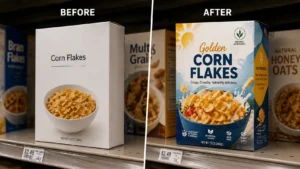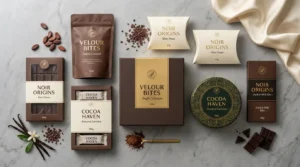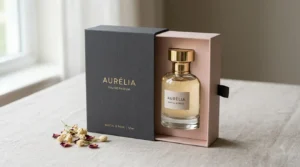
Here’s something no one tells you when you start a chocolate business: your recipe got you into the game, but your packaging decides whether you win it. Customers can’t taste your chocolate through the shelf. They can only see it — and they’re making a judgment call in under three seconds.
If you’re a small chocolate business owner, you’ve probably felt the sting of this moment. Your product is premium. Your packaging? Not quite there yet. The good news is that affordable chocolate packaging that actually looks high-end is no longer reserved for big brands with massive budgets — and we’re going to show you exactly how to get it right.
🍫 Why Packaging Is the Silent Salesperson You Can’t Afford to Ignore
Before a single piece of chocolate touches someone’s tongue, their eyes have already made a judgment. Packaging isn’t just a container — it’s your brand’s first handshake with a potential customer.
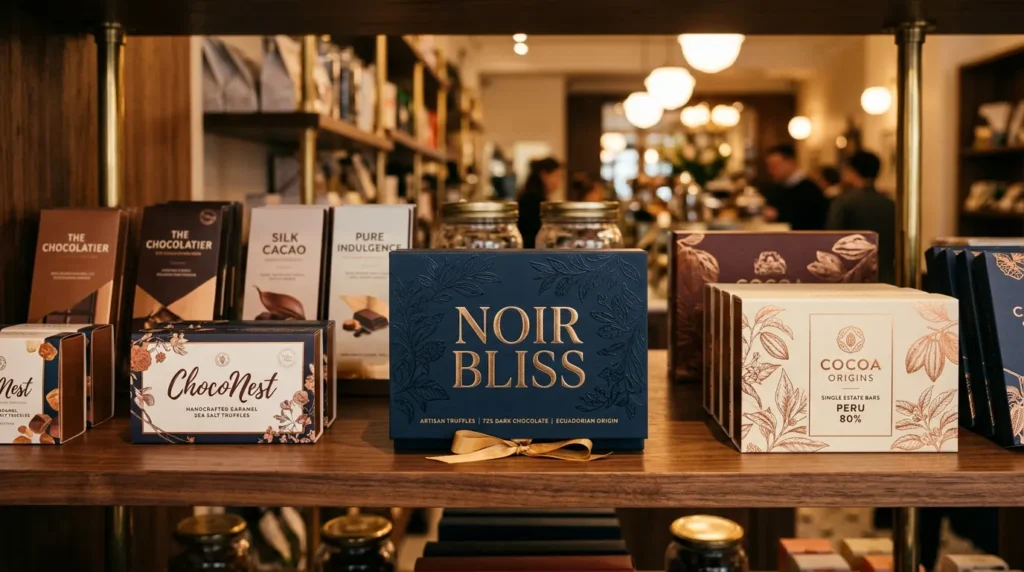
The First Impression Problem
Think about the last time you browsed a gift shop or a farmers’ market. What made you pick up one product over another? In most cases, it was the packaging. A beautifully designed box or a sleek foil wrap signals quality before anyone reads a word of your copy.
For small businesses, this matters even more. You don’t have a massive advertising budget or a prime retail shelf at eye level. Your packaging has to do the heavy lifting.
What the Data Actually Says
According to Statista, the global chocolate confectionery market is valued at over $140 billion in 2025 and is projected to grow at nearly 5% annually through 2030. That’s an enormous and expanding market — and for small chocolate businesses, standing out in it starts with packaging that signals quality the moment it’s seen.
Packaging influences:
- Whether someone picks your product up in the first place
- Whether they perceive it as a gift-worthy item
- Whether they come back for repeat purchases
- Whether they recommend it to friends and family
- Whether they post about it on social media
📦 The Real Cost of “Standard” Minimum Orders (And Why They’re Crushing Small Businesses)
Here’s one of the biggest pain points small chocolate makers face: most packaging suppliers require minimum orders of 500, 1,000, or even 5,000 units. If you’re making 50 boxes of artisan truffles a week, that’s not a solution — that’s a warehouse problem.
The Hidden Trap of Bulk-Only Suppliers
Bulk minimum orders tie up your cash, fill your spare bedroom with boxes you won’t use for months, and force you to commit to a design before you’ve really tested your brand. It’s a risky gamble that many small businesses simply can’t afford to take.
The Smarter Approach: No-Minimum Packaging
This is where working with a packaging partner like Ray Packaging changes the game entirely. With no minimum order requirements, you can:
- Order exactly what you need for your current batch
- Test different packaging styles without a huge financial commitment
- Refresh your design seasonally without leftover stock going to waste
- Scale up naturally as your business grows
It means you can start looking premium from day one — even when you’re still in the early stages of building your brand.
🎁 Types of Chocolate Packaging That Look Expensive (Without the Price Tag)
Not all chocolate packaging is created equal. Different formats suit different products, price points, and customer experiences. Here’s a breakdown of the most popular options and what they do best.
Rigid Gift Boxes
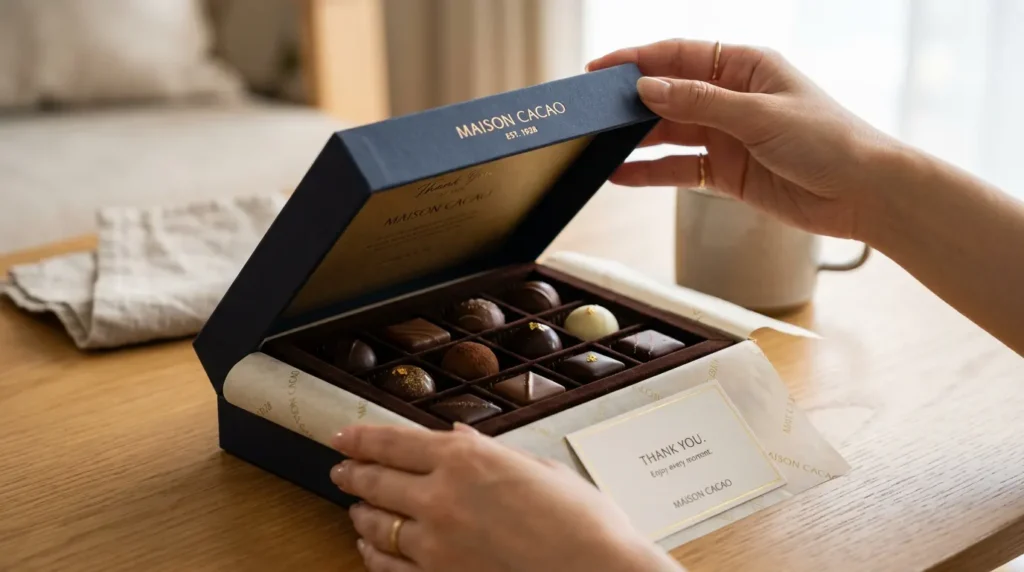
If you want to position your chocolates as a luxury gift item, rigid boxes are your best friend. They have a substantial feel, open with a satisfying lift, and instantly communicate premium quality. These work brilliantly for:
- Truffle collections and assortments
- Valentine’s Day or Christmas gift sets
- Corporate gifting and event favours
- High-end retail and boutique settings
Folding Cartons
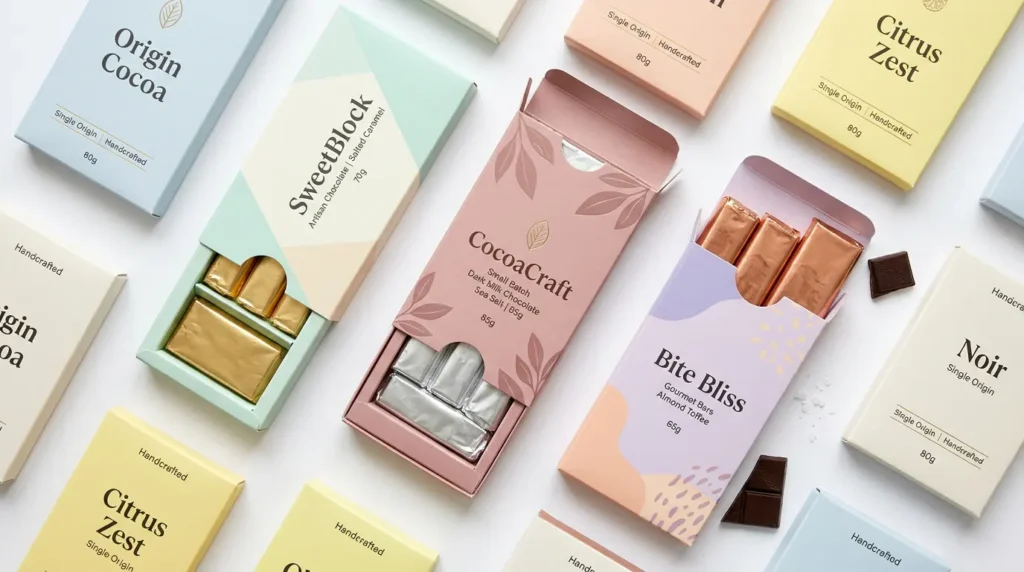
Folding cartons offer a great balance between affordability and visual impact. They’re lightweight, easy to customise, and print beautifully. For small chocolate bars, bonbon collections, or single-serve products, a well-designed folding carton can look just as polished as anything you’d find in a high-end department store.
Pillow Boxes and Sleeve Wraps
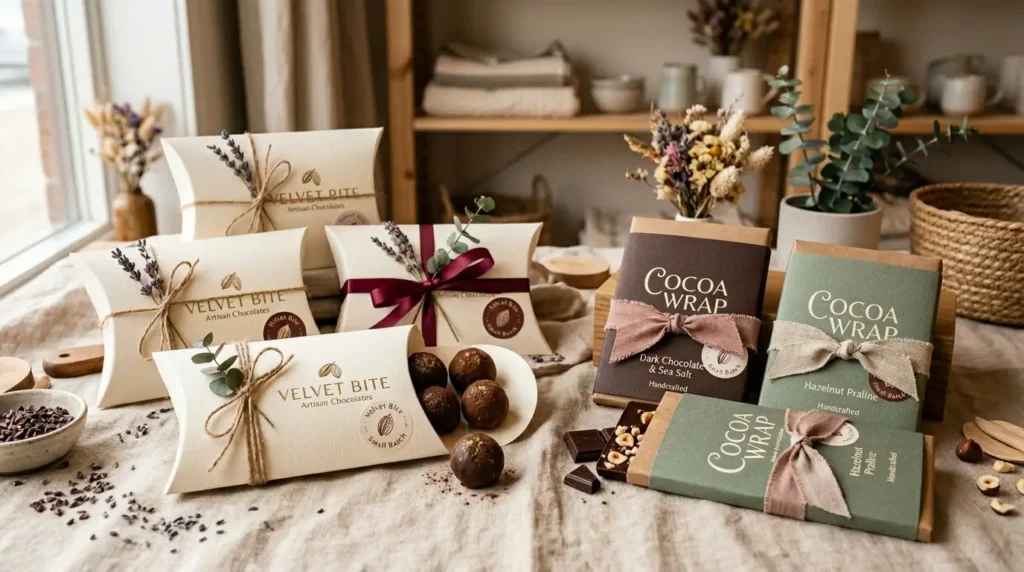
These are perfect for smaller, impulse-buy items. A pillow box with a ribbon or a custom sleeve around a simple tray adds a boutique feel at a very accessible price point. They’re quick to assemble, easy to store flat, and look wonderful at point-of-sale.
Window Boxes
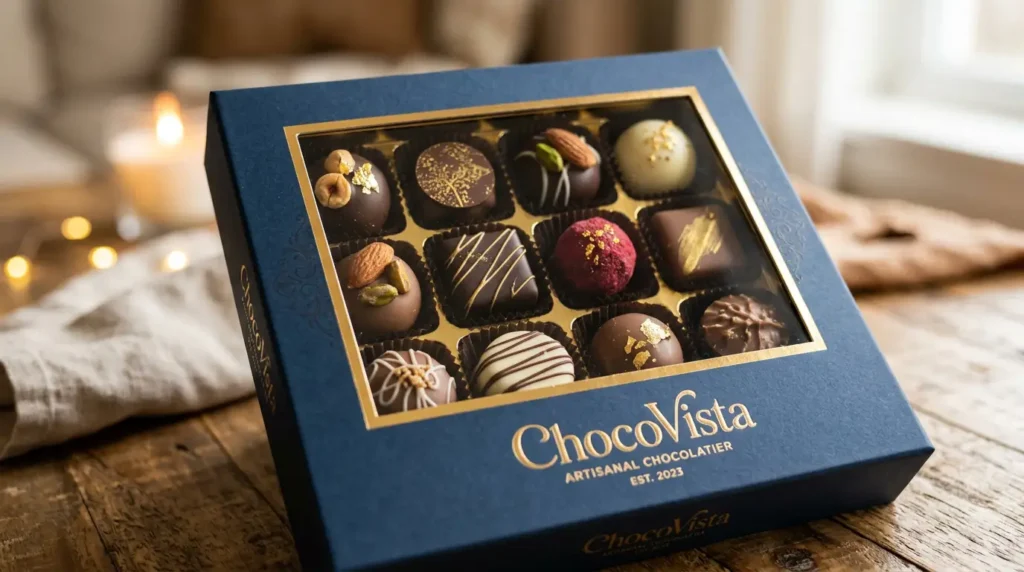
Want customers to see your product before they buy? A box with a clear acetate window lets the chocolate do the talking. This is especially powerful for hand-decorated pieces, layered assortments, or anything with visual wow factor.
Kraft and Eco-Friendly Options
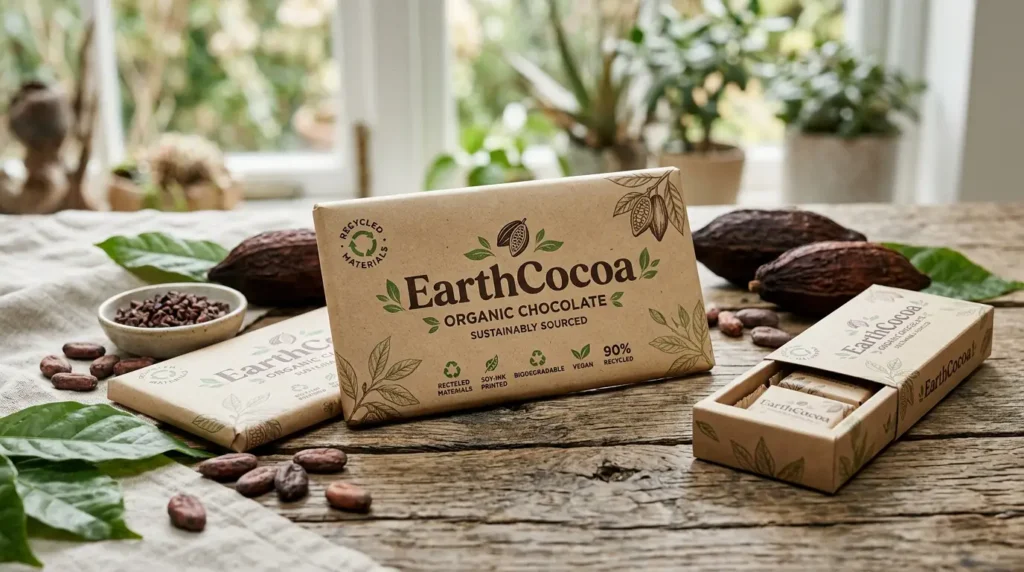
Consumers are increasingly conscious about sustainability. In fact, eco-friendly packaging has shifted from a “nice to have” to an expectation for many buyers. Kraft board boxes, recycled materials, and soy-based inks give your brand an authentic, responsible image — which resonates strongly with today’s conscious consumer.
🎨 How to Make Affordable Packaging Look Like It Cost a Fortune
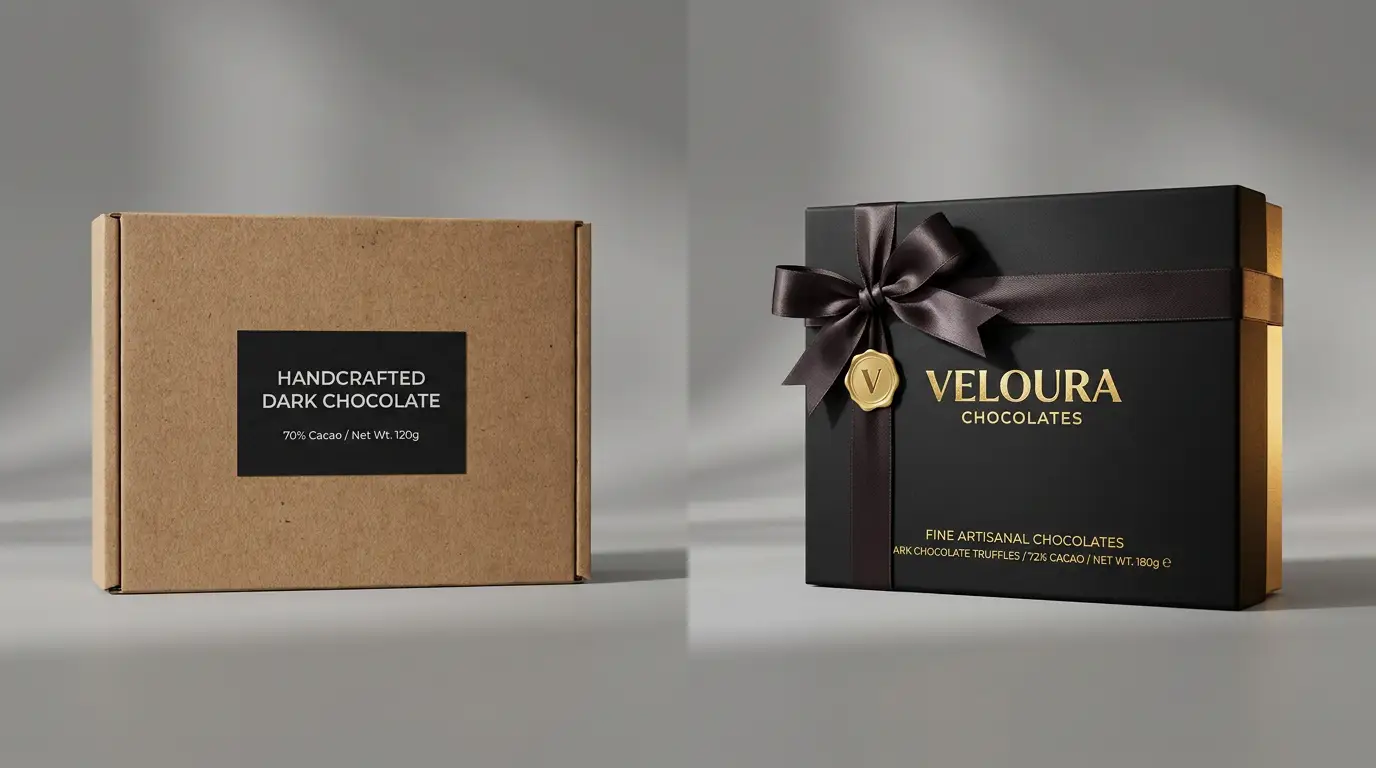
Here’s the truth: the difference between cheap-looking packaging and premium-looking packaging often has nothing to do with how much you spent. It’s about design decisions, finishing touches, and consistency.
Nail the Unboxing Experience
The unboxing moment is where premium brands earn their reputation. You don’t need to spend a fortune to create a memorable one. Consider:
- Tissue paper or coloured shred inside the box
- A small personalised note or thank-you card
- A sticker seal on the outer box for a polished close
- A branded ribbon or twine for gift items
Small details like these cost very little but transform the entire customer experience.
Invest in a Strong, Consistent Design
Your packaging design should reflect your brand’s personality across every touchpoint. That means consistent fonts, colours, and imagery — whether it’s a small gift tag or a full-size retail box. This consistency is what separates brands that look homemade from those that look like they belong on a Harrods shelf.
Ray Packaging offers design support to help small businesses develop packaging that looks cohesive and professional, even if you’re starting from scratch.
Choose the Right Finish
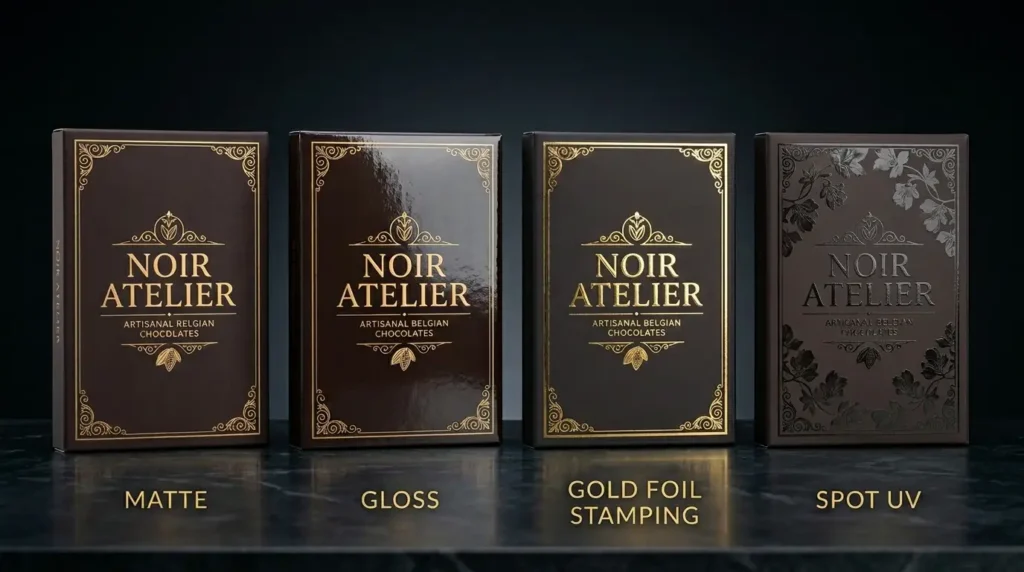
The finish on your packaging makes an enormous difference to how it’s perceived:
- Matte lamination gives a soft, premium, high-fashion feel
- Gloss lamination creates a vibrant, eye-catching look great for gifting
- Spot UV coating adds luxurious contrast by highlighting specific design elements
- Foil stamping in gold or silver instantly elevates perceived value
You’d be surprised how much a matte box with a gold foil logo can outperform a plain gloss alternative — even at the same price level.
🌱 Sustainability as a Selling Point, Not Just a Responsibility
Eco-friendly packaging isn’t just good for the planet — it’s good for business. A growing segment of chocolate buyers, particularly in the gifting and premium market, actively look for brands that share their values.
What Eco-Friendly Chocolate Packaging Looks Like in Practice
Sustainable doesn’t have to mean dull. Some of the most beautiful packaging we’ve seen uses recycled board, vegetable-based inks, and minimal plastic — and it looks absolutely stunning. Options to consider include:
- FSC-certified board and paperstock
- Fully recyclable or compostable boxes
- Plastic-free window alternatives (like PLA cellulose film)
- Minimalist design that uses less ink and fewer materials
Communicating Your Values on Pack
Once you’ve made the switch to sustainable materials, tell your customers about it. A small line of copy on your packaging — “Printed on recycled board” or “This box is fully recyclable” — builds trust and reinforces your brand’s values. It’s a tiny addition with a meaningful impact.
📬 Chocolate Packaging for E-Commerce: Getting It Right for Shipping
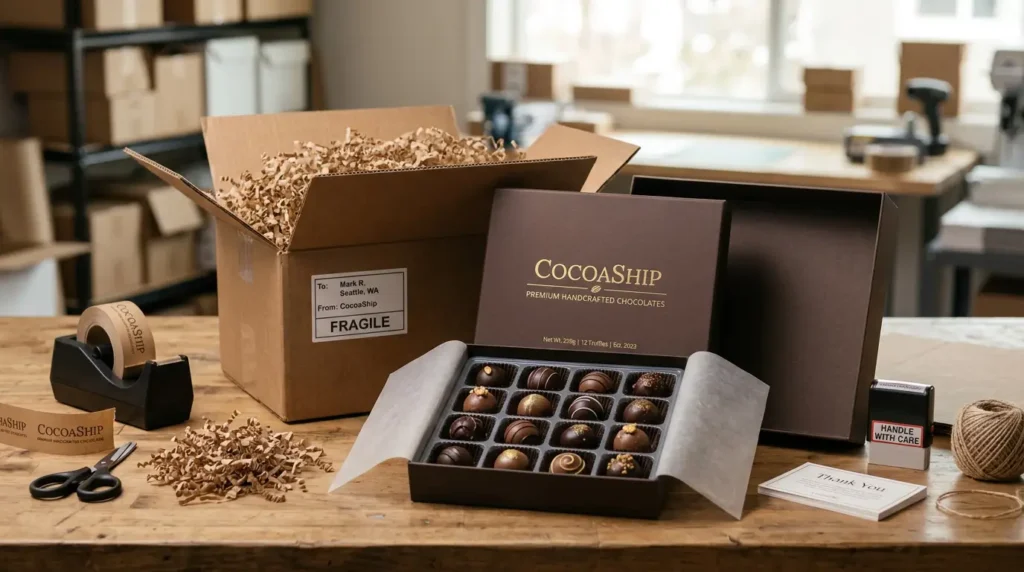
Selling online adds a whole new layer of complexity to chocolate packaging. Your boxes need to survive transit, protect against temperature fluctuations, and still arrive looking beautiful.
Protective Packaging That Still Looks Good
The key is designing for both aesthetics and function. A good e-commerce chocolate packaging setup typically includes:
- An inner tray or insert to hold chocolates securely in place
- A rigid or sturdy outer box that won’t collapse under pressure
- Void fill (tissue, shred, or moulded inserts) to prevent movement
- A clear outer polybag or seal if extra moisture protection is needed
The Double-Box Method
For premium gifting products shipped directly to recipients, consider the double-box method: a beautiful branded gift box inside a plain, protective outer shipping box. This keeps the presentation intact and protects the product at the same time.
Ray Packaging can help you design packaging that works for both retail and e-commerce without needing two entirely different setups.
✅ A Quick Checklist Before You Order Your Chocolate Packaging
Before you finalise your order, run through this checklist to make sure you’ve covered all the bases:
- Does the packaging reflect your brand’s visual identity (colours, fonts, logo)?
- Have you considered the unboxing experience — not just the outside?
- Is the size right for your product with minimal movement inside?
- Have you chosen a finish that elevates the perceived value?
- Does your packaging work for both retail and gifting occasions?
- Have you thought about sustainability and communicated it on pack?
- Are you ordering a quantity that matches your actual current needs?
- Have you checked that your packaging is food-safe and compliant?
If you can tick all eight boxes, you’re in a great position to go to print.
Why Ray Packaging Is the Perfect Partner for Small Chocolate Businesses
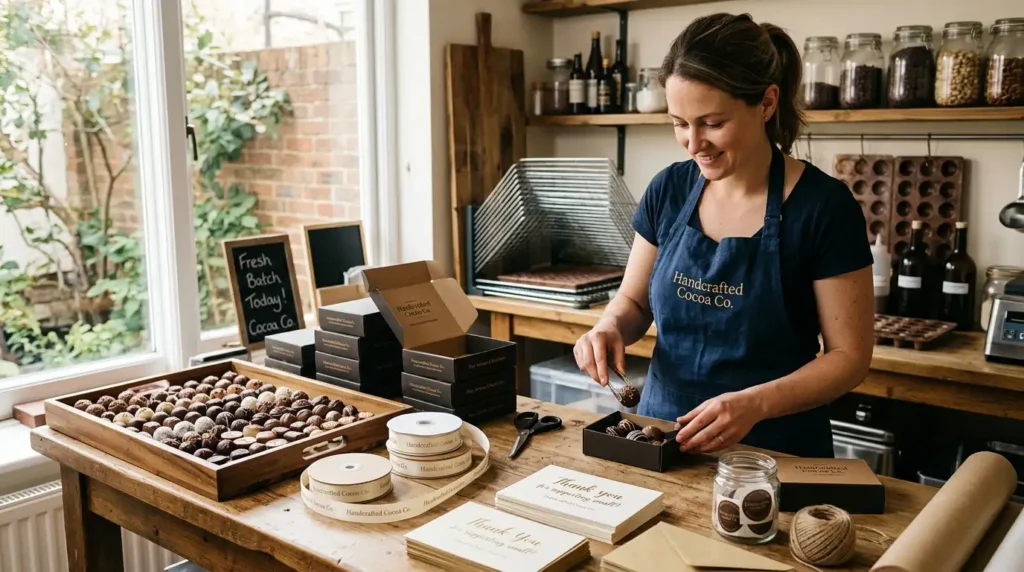
At Ray Packaging, we understand that small businesses don’t need less quality — they need more flexibility. That’s why we’ve built our entire service around making premium packaging accessible to brands at every stage of growth.
Whether you need 50 luxury gift boxes for a seasonal launch or 500 folding cartons for a new retail listing, we’ve got you covered with:
- No minimum order requirements — order exactly what you need
- Full design support — from concept to print-ready artwork
- Premium materials and finishes — matte, gloss, foil, spot UV and more
- Sustainable options — FSC-certified, recyclable, and eco-conscious materials
- Fast turnaround — because small businesses can’t wait weeks for stock
Your chocolate deserves packaging that does it justice. Let’s make it happen.
Get a free quote from Ray Packaging today →
Frequently Asked Questions
What is the best type of packaging for small batch chocolate businesses?
For small batch chocolate makers, folding cartons and rigid gift boxes tend to offer the best balance of visual impact and affordability. The best choice depends on your product type, price point, and whether you’re selling retail, online, or as a gift item. Ray Packaging can help you identify the right format for your specific needs.
Can I order custom chocolate packaging with no minimum order?
Yes – Ray Packaging offers custom chocolate packaging with no minimum order requirements. This means small businesses can order exactly what they need without committing to large volumes they may not use, making it ideal for startups, seasonal products, and test launches.
How do I make my chocolate packaging look premium on a small budget?
Focus on strong, consistent design; choose a premium finish such as matte lamination or spot UV; and pay attention to the unboxing experience with small details like tissue paper and branded seals. These elements cost very little but dramatically elevate the perceived value of your packaging.
What chocolate packaging materials are best for eco-conscious brands?
FSC-certified recycled board, soy-based inks, compostable window films, and plastic-free construction are the most popular sustainable options. Many of these materials are available at comparable prices to conventional alternatives and resonate strongly with today’s environmentally aware consumer.
How should I package chocolates for shipping online?
Use a sturdy inner box with a secure insert or tray to hold chocolates in place, combined with a plain outer shipping box for protection. Void fill such as tissue paper or shred prevents movement during transit. Ray Packaging can help you design a dual-purpose solution that looks beautiful on arrival and survives the journey.