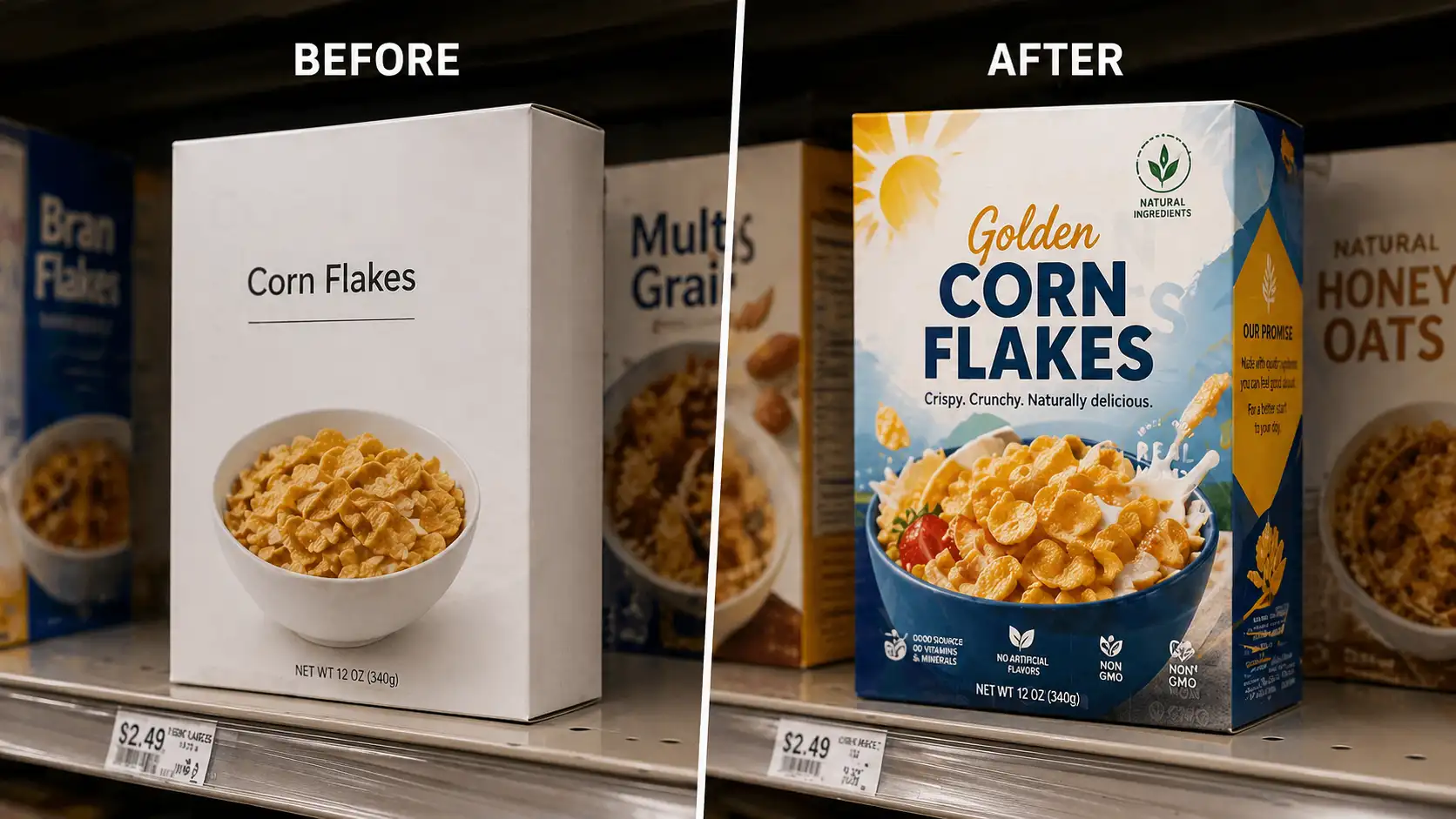
Imagine you’ve spent months perfecting your cereal recipe. The taste is incredible, the ingredients are wholesome, and you’re finally ready to launch. But when your product hits the shelf – or lands on a customer’s doorstep – it’s sitting in a plain, forgettable box that looks like it belongs in a discount bin.
That’s the harsh reality for thousands of food brands every year. Great products get overlooked simply because their custom cereal boxes don’t do them justice. The good news? With the right packaging strategy, your box can become your most powerful salesperson – working 24/7 to attract attention, build trust, and drive repeat purchases.
This guide will walk you through everything you need to know about custom cereal box printing and packaging – from design principles to material choices – so your brand stops blending in and starts standing out.
🧠 Why Your Cereal Box Is More Than Just a Container
Most people think of packaging as a practical necessity – something to keep the cereal fresh and stack neatly on shelves. But the most successful food brands know better.
Your box is a brand ambassador. It’s often the very first physical touchpoint a customer has with your product, and first impressions are formed in seconds.
The Psychology Behind Purchase Decisions
According to a report by Statista, 72% of consumers say packaging design influences their purchasing decisions. That’s nearly three out of four buyers making snap judgments based on how your product looks — before they’ve ever tasted it.
This is especially true in the competitive breakfast aisle, where dozens of brands compete for attention within a few feet of shelf space.
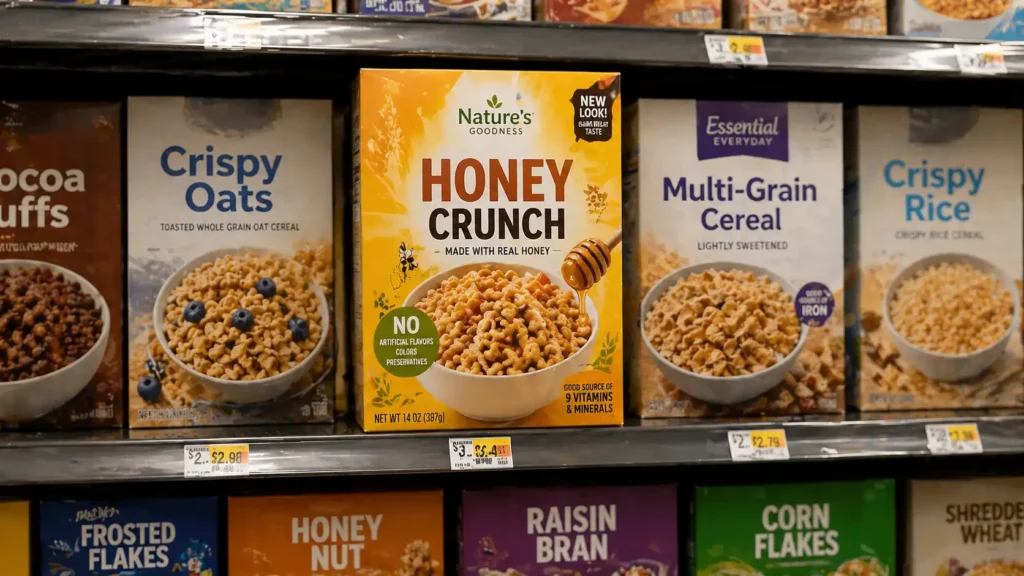
What Shoppers Actually Notice First
When someone scans a store shelf or scrolls through an online grocery platform, here’s what catches their eye – in order:
- Color – Bold, distinctive colors create instant recognition
- Typography – Clear, legible fonts signal professionalism and trust
- Imagery – Appetizing visuals communicate flavor and quality
- Brand name – Memorable names reinforced by strong logo placement
- Callouts – Key claims like “high protein,” “gluten-free,” or “non-GMO”
Understanding this hierarchy lets you design with intention rather than guesswork.
🎨 The Design Elements That Make Custom Cereal Boxes Work
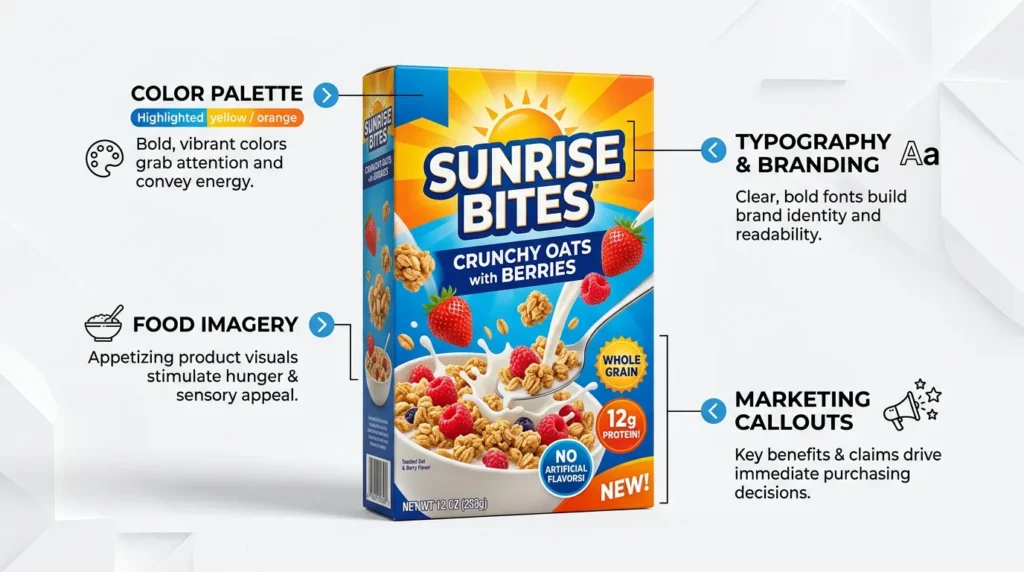
Good cereal box design isn’t accidental. It’s a deliberate combination of visual choices that work together to tell your brand’s story and communicate value.
Color Strategy: More Than Aesthetic Preference
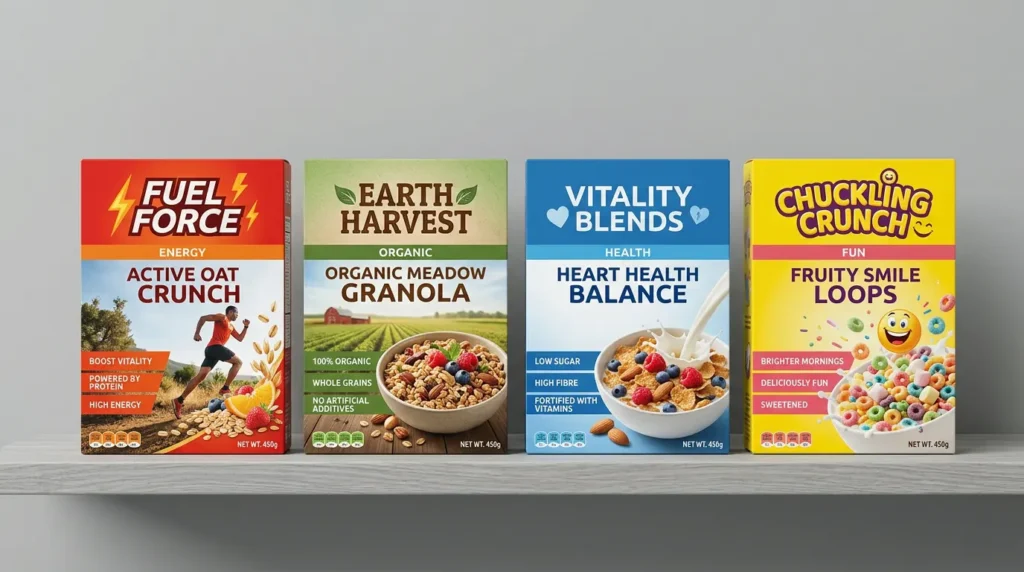
Color is arguably the single most powerful tool in your packaging arsenal. Different colors trigger different emotional responses:
- Warm reds and oranges – Energy, excitement, appetite stimulation (think breakfast urgency)
- Earthy greens and browns – Natural, organic, wholesome credentials
- Blues and whites – Cleanliness, trust, health-consciousness
- Bright yellows – Cheerfulness, fun, family-friendliness
The key is consistency. Your box colors should align with your overall brand identity so customers recognize you instantly across every touchpoint.
Typography That Works Hard for You
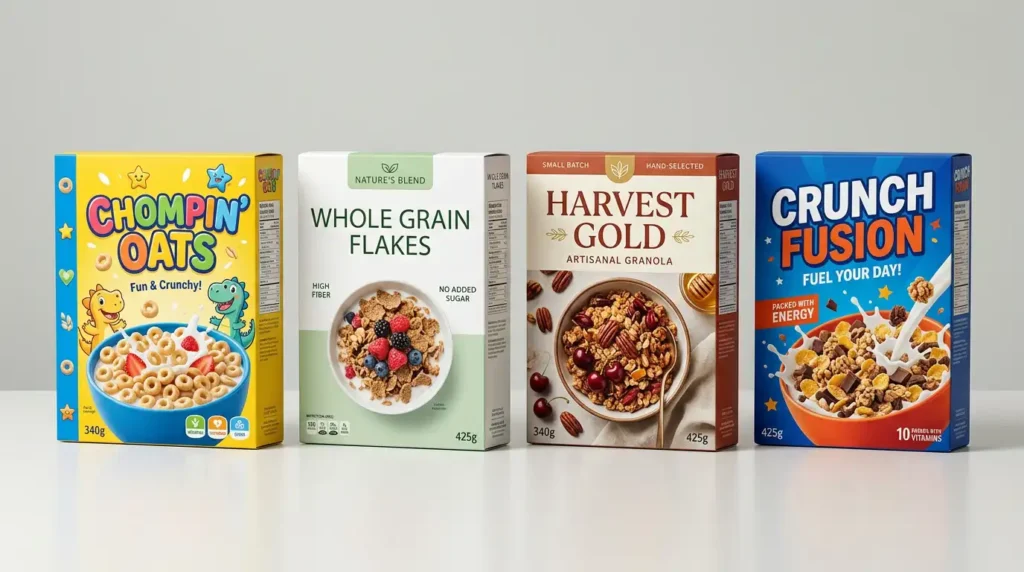
Font choice communicates personality before a single word is read. A playful, rounded typeface signals a kid-friendly product. A clean, modern sans-serif speaks to health-conscious adults. A hand-lettered script evokes artisanal craftsmanship.
A few practical rules to follow:
- Use no more than two or three typefaces on a single box
- Ensure your brand name is the largest, most prominent text element
- Keep ingredient lists and nutritional info legible at small sizes
- Never sacrifice readability for style
The Power of Imagery and Illustration
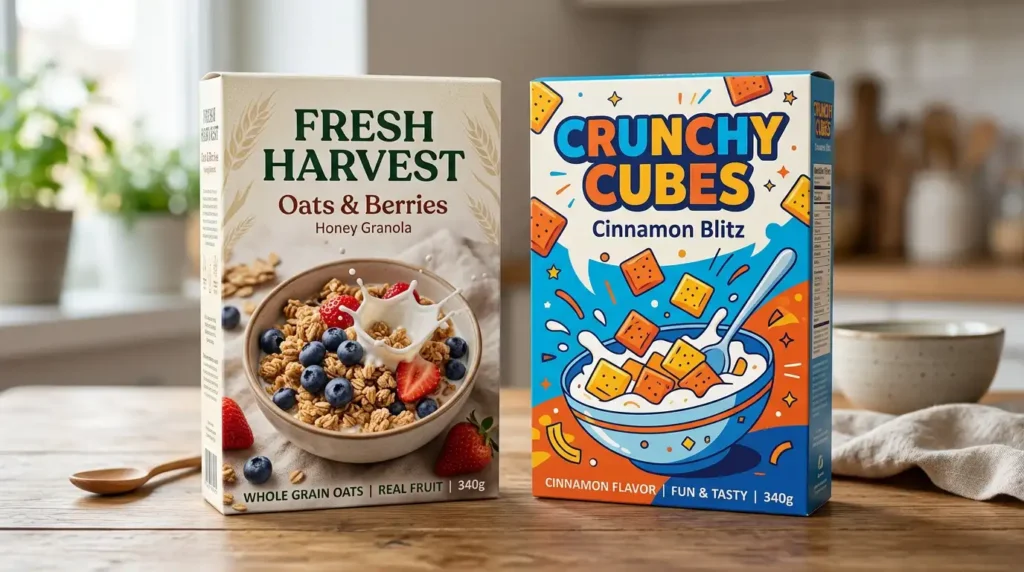
A beautifully styled food photograph of your cereal in a bowl, splashed with milk and fresh fruit, can communicate taste better than any headline. Illustration, on the other hand, can create a distinctive, ownable visual style that’s hard to replicate.
Both approaches work – the right choice depends on your brand’s personality and target audience.
📦 Choosing the Right Materials for Your Cereal Box
Design gets the attention, but materials determine the experience – and they affect your sustainability story too.
Paperboard Options Explained
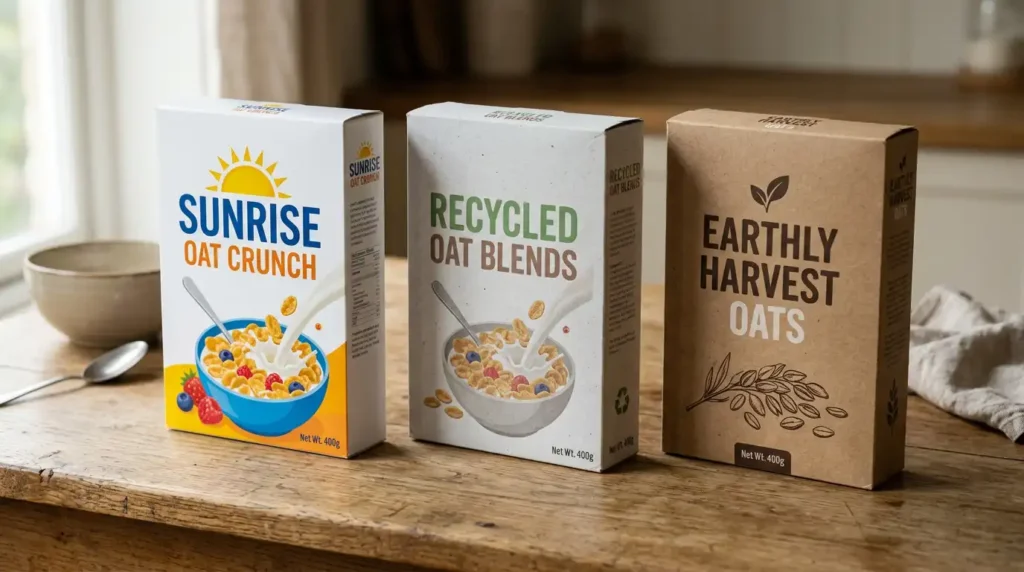
Most cereal boxes are made from paperboard, but not all paperboard is equal. Here’s what you need to know:
- SBS (Solid Bleached Sulfate) – Premium white board, excellent for vibrant print quality, ideal for high-end or health-focused brands
- CRB (Coated Recycled Board) – Made from recycled content, slightly off-white, great for eco-conscious brands
- Kraft paperboard – Natural brown appearance, signals rustic or organic positioning without any additional messaging
The thickness you choose (typically measured in points, from 14pt to 24pt) affects how rigid and premium the box feels in hand. Thinner boards cost less; heavier boards communicate quality.
Finishes That Elevate Your Box
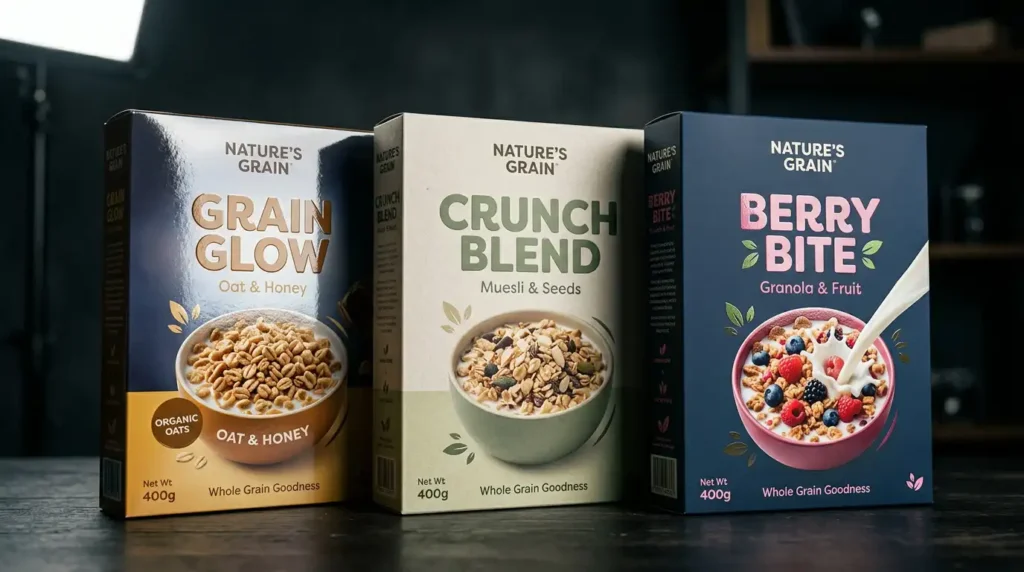
Once printed, a finish coating transforms how your box looks and feels:
- Gloss laminate – Shiny, vibrant, eye-catching on shelves
- Matte laminate – Sophisticated, premium feel, increasingly popular with health brands
- Soft-touch matte – Velvety texture that feels luxurious to handle
- Spot UV – Glossy highlights on specific design elements, creating contrast and depth
Even a simple finish upgrade can make a significant difference in perceived product value.
Sustainability: No Longer Optional
Today’s consumers – particularly millennials and Gen Z – actively reward brands that make environmentally responsible choices. Recyclable materials, soy-based inks, and reduced packaging waste aren’t just feel-good decisions. They’re increasingly a competitive requirement.
At Ray Packaging, sustainable material options are built into the process from the start, not bolted on as an afterthought.
🖨️ Understanding the Custom Cereal Box Printing Process
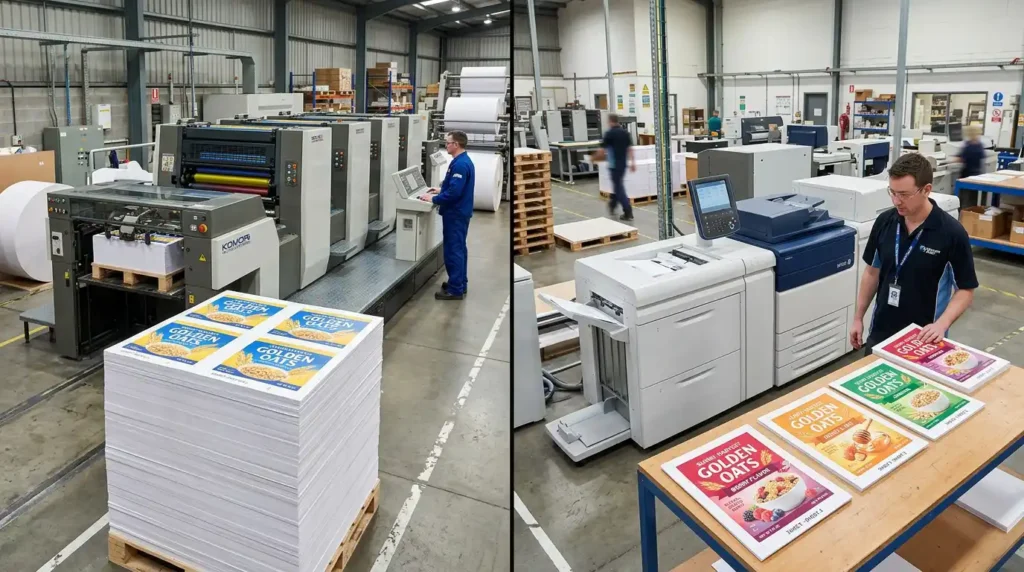
Knowing how printing works helps you make smarter decisions and avoid costly mistakes.
Offset vs. Digital Printing: Which is Right for You?
The two primary printing methods each have their strengths:
Offset printing uses physical printing plates and delivers exceptional color accuracy and consistency. It’s the gold standard for large runs where per-unit cost needs to be low. The tradeoff is higher setup costs and less flexibility for small batches.
Digital printing requires no plates, making it faster, more affordable for smaller quantities, and perfect for testing new designs or limited edition runs. Color accuracy has improved dramatically in recent years, making digital a legitimate option for many brands.
For emerging brands and small businesses, digital printing is often the smarter starting point – it lets you iterate and refine without committing to massive minimums.
The Problem With High Minimum Orders
One of the biggest frustrations for small food brands is the traditional packaging industry’s obsession with large minimum order quantities. Being forced to order 10,000 boxes when you only need 500 creates a real problem:
- Cash flow is strangled upfront
- You’re stuck with boxes if you need to update a design or fix an error
- Warehouse space gets eaten up by inventory you won’t use for months
- Seasonal or limited-edition products become financially impractical
Ray Packaging was built specifically to solve this. With no minimum order requirements, you can order exactly what you need – whether that’s 50 boxes for a farmers market launch or 5,000 for a regional retail rollout.
Getting Your Files Print-Ready
Before your design goes to print, it needs to be properly prepared. Common issues that cause delays or poor results include:
- Images that are too low resolution (always use 300 DPI minimum)
- Colors set to RGB instead of CMYK
- Missing bleed area (usually 3mm on all sides beyond the trim line)
- Fonts not embedded or converted to outlines
If design isn’t your strength, Ray Packaging’s design support team can help you get there – from minor file adjustments to full design creation.
🌟 Making Your Box Work Across Every Sales Channel
A cereal box that performs well on a physical shelf needs to be reconsidered for e-commerce — and vice versa.
Retail Shelf Presence
In brick-and-mortar retail, your box competes in three dimensions. The front panel is your primary billboard, but the sides and back matter too – shoppers pick boxes up, turn them over, and read them. Every panel is an opportunity to reinforce your brand story and provide useful information.
Key considerations for retail packaging:
- Clear product name visibility from a distance
- Shelf-talker friendly design (bold color blocks help)
- Back panel that builds trust through storytelling, certifications, and clear nutritional information
E-Commerce and Unboxing Experience
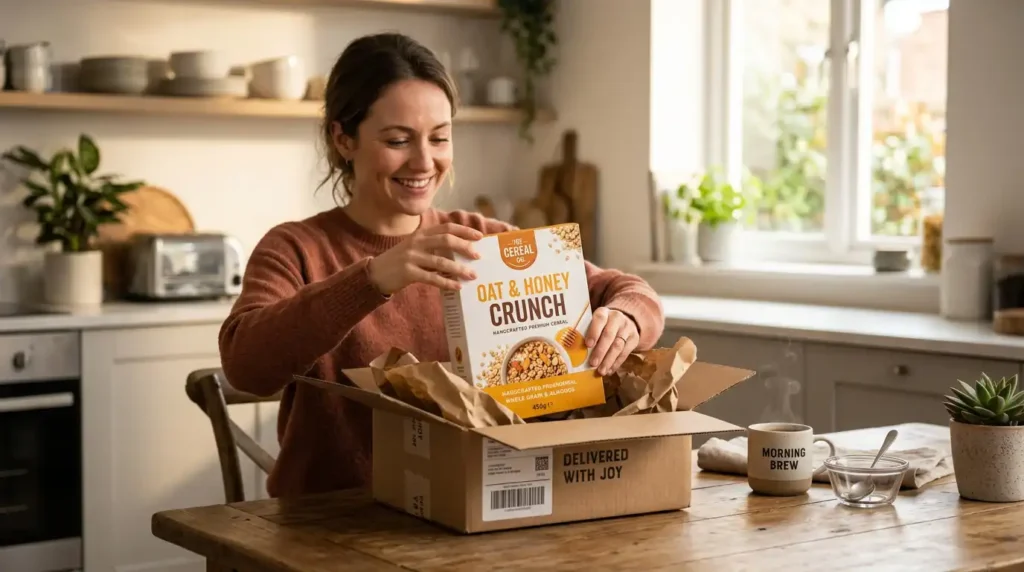
When customers order online, the box arrives in a shipping mailer – so the unboxing moment is where your packaging earns its keep. A beautifully printed cereal box that arrives crisp and intact creates a moment of delight that drives social sharing and repeat purchases.
This is where investing in sturdy, well-printed custom packaging pays dividends that go far beyond the initial sale.
💡 Practical Tips to Get the Most From Your Custom Cereal Box Design
Before you finalize your design, run through this checklist:
- Get a physical proof before full production – Digital mockups don’t capture how colors and finishes actually look in hand
- Check legibility at actual size – Print a mockup at home and see how it reads from arm’s length
- Design for your worst-case lighting – Supermarket lighting can be harsh; make sure your design holds up
- Leave breathing room – Overcrowded designs feel cheap; white space is a sign of confidence
- Tell a story on the back panel – Consumers want to know who made their food and why it matters
These small steps can mean the difference between a box that sits on shelves and one that flies off them.
Frequently Asked Questions
What’s the minimum quantity I can order for custom cereal boxes?
At Ray Packaging, there are no minimum order requirements, you can order 50 or as many boxes as your business needs. This makes custom packaging accessible for startups, small-batch producers, and brands testing new products without the financial risk of large upfront commitments.
How long does it take to receive custom printed cereal boxes?
Production and delivery timelines vary depending on the complexity of your order and the printing method used. Our standard turnaround time is 10-12 business days. Ray Packaging can discuss specific timelines when you request a quote, and rush options may be available for time-sensitive launches.
Can I get help with the design of my cereal box?
Absolutely. Ray Packaging offers design support to help brands create packaging that’s both visually compelling and print-ready. Whether you need minor file adjustments or want to build a design from scratch, the team can guide you through the process.
What materials are available for eco-friendly cereal box packaging?
Ray Packaging offers a range of sustainable material options including recycled paperboard and printing with environmentally responsible inks. These choices let you communicate your brand’s commitment to sustainability without sacrificing print quality or shelf appeal.
How do I know which box size and style is right for my product?
The right dimensions depend on your cereal’s volume, density, and how it will be sold (retail shelf, e-commerce, subscription box, etc.). Ray Packaging’s team can help you identify the most practical and cost-effective box specifications for your specific product just reach out with your requirements and they’ll walk you through the options.