You’ve worked hard on your product. The formula is right, the quality is there, the price is fair. But when it comes to the shelf – or the doorstep – something still isn’t clicking. Customers scroll past. Shoppers move on. Sound familiar?
Most of the time, the problem isn’t the product. It’s the packaging.
That’s the quiet, powerful reality that holographic boxes solve better than almost any other packaging choice. They don’t just hold your product – they perform for it. And in a world where buyers make snap judgments in under three seconds, your packaging isn’t just a container. It’s your loudest salesperson.
Whether you’re launching a luxury skincare line, selling artisan chocolates, or packaging handmade jewelry, the right box can be the difference between “I’ll think about it” and “I need this now.” At Ray Packaging, we see it every single day – and this guide is here to show you exactly how to make holographic packaging work hard for your brand.
✨ What Exactly Makes a Box “Holographic” – and Why It Matters
You’ve seen holographic packaging before, even if you didn’t know what to call it. That eye-catching, prismatic shimmer that dances with color every time you shift the box? That’s the holographic effect at work – and it’s a lot more sophisticated than it looks.
The Science Behind the Shine
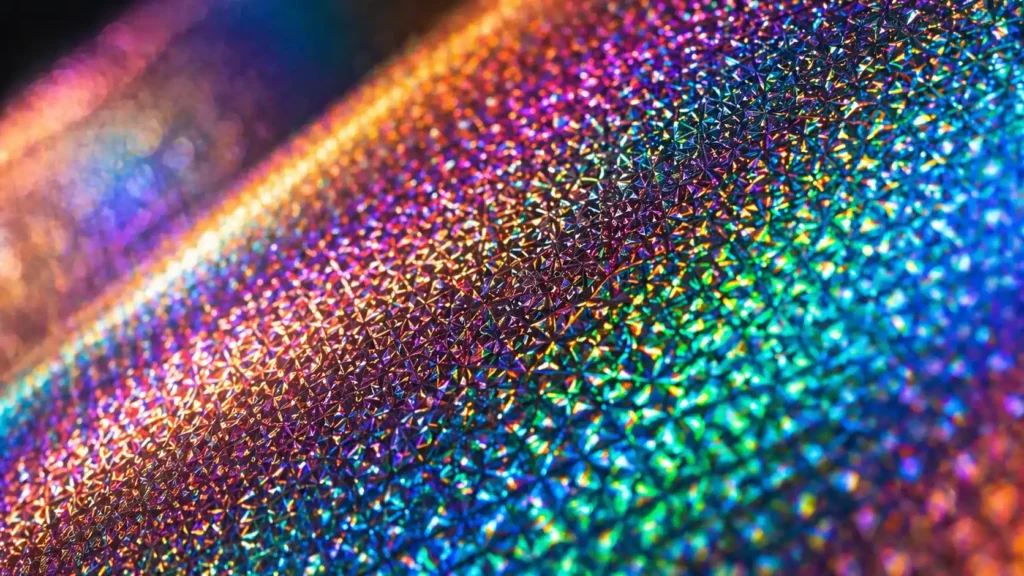
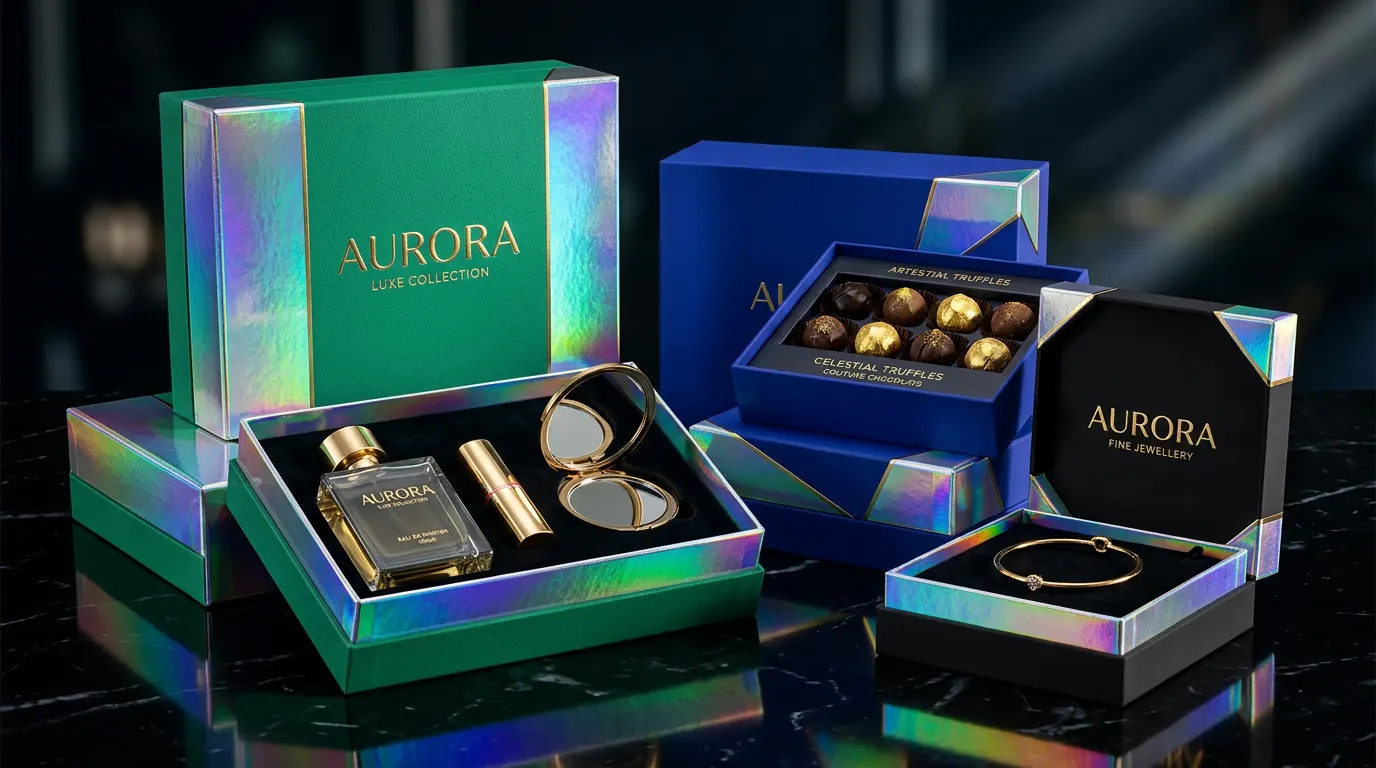
Holographic packaging uses a special foil or film laminate that is embossed with microscopic patterns. These tiny structures refract and reflect light at different angles, splitting white light into its full visible spectrum – much like a prism does. The result is that beautiful, constantly shifting rainbow effect that seems to contain multiple colors at once, without any ink or dye creating them.
The key distinction is that holographic doesn’t mean “one shiny color.” It means multi-dimensional light play that changes depending on angle and illumination. No two moments of looking at a holographic box are quite the same – and that’s exactly what makes it so mesmerizing to customers.
Types of Holographic Effects You Can Choose From
Not all holographic packaging looks identical. Depending on your brand aesthetic, you can explore several distinct styles:
- Rainbow holographic – the classic, full-spectrum shimmer that cycles through every color in the visible spectrum
- Silver holographic – a more refined, metallic base with subtle color shift, often used in luxury and cosmetic packaging
- Gold holographic – warm, prestigious, and ideal for premium gifting or food products
- Geometric pattern holographic – structured, angular patterns embedded into the foil for a modern, editorial feel
- Starburst or dot-matrix holographic – a repeating micro-pattern that creates a more sparkle-forward effect
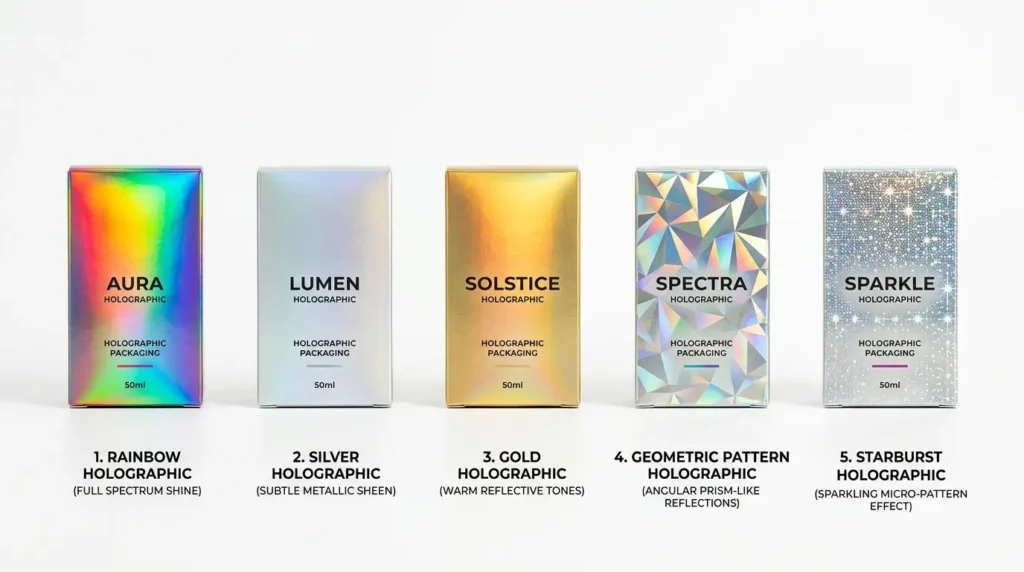
Each of these can be applied to different box styles – rigid gift boxes, folding cartons, mailer boxes, and more – giving you incredible flexibility in how you bring the look to life.
🛍️ Why Holographic Packaging Doesn’t Just Look Good – It Sells
Let’s get one thing straight: holographic boxes aren’t just a pretty gimmick. When used strategically, they deliver real, measurable results for brands of every size. The reasons go deeper than aesthetics.
First Impressions Are Made in Milliseconds
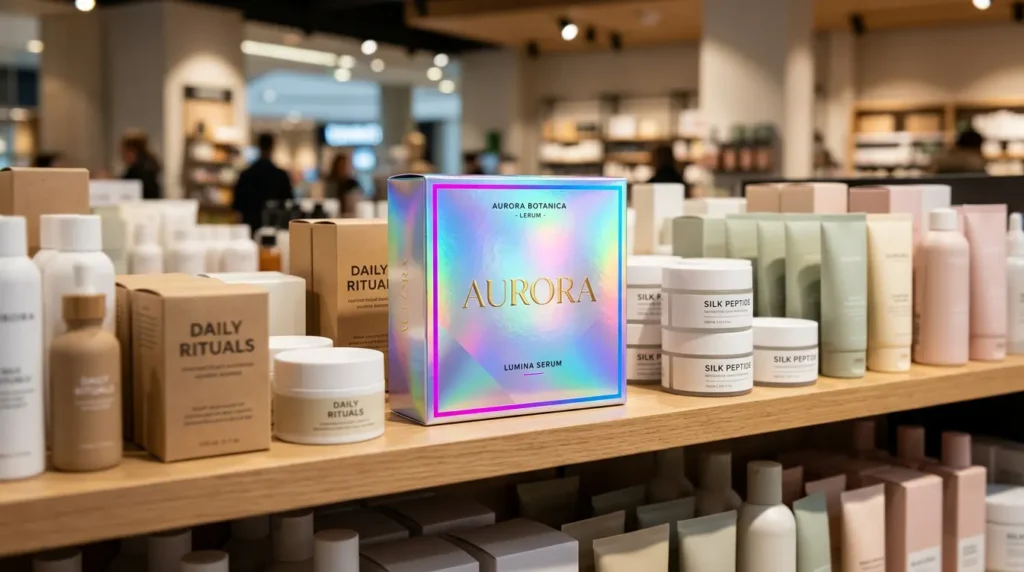
According to a consumer study by Ipsos, nearly 72% of consumers say that packaging design influences their purchasing decisions. When your product competes for attention in a crowded retail or e-commerce environment, that number matters enormously.
Holographic boxes tap directly into this psychology. They signal quality before a single word of your branding is read. The shimmer communicates: something special lives inside this box.
The Unboxing Experience Is a Marketing Channel Now
We live in the era of unboxing videos. Millions of people watch others open packages on YouTube, TikTok, and Instagram – and the packaging itself is a huge part of what gets shared. A holographic box catches the camera’s light beautifully, creating natural, viewer-stopping visual content that you never had to pay to produce.
Think of every unboxing video featuring your product as free advertising with an authentic, third-party voice behind it. The packaging does the talking – and holographic packaging talks very, very loudly.
Perceived Value Goes Way Up
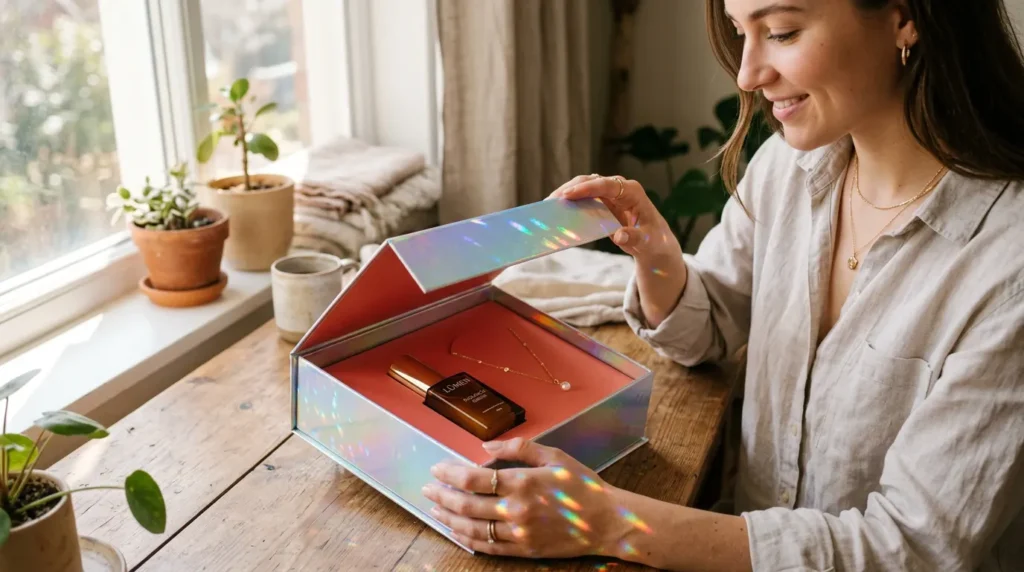
Here’s a hard truth: customers judge the contents by the container. When your product arrives in holographic packaging, it’s perceived as more luxurious, more premium, and more worth the price – even before the box is opened. This is especially valuable if you’re competing in a crowded market where rivals are selling similar products at similar price points. Your packaging becomes your differentiator.
💡 Which Products and Industries Benefit Most from Holographic Boxes
Holographic packaging isn’t a one-size-fits-all solution – but it fits far more brands than you might think. Here’s where we see it making the biggest impact.
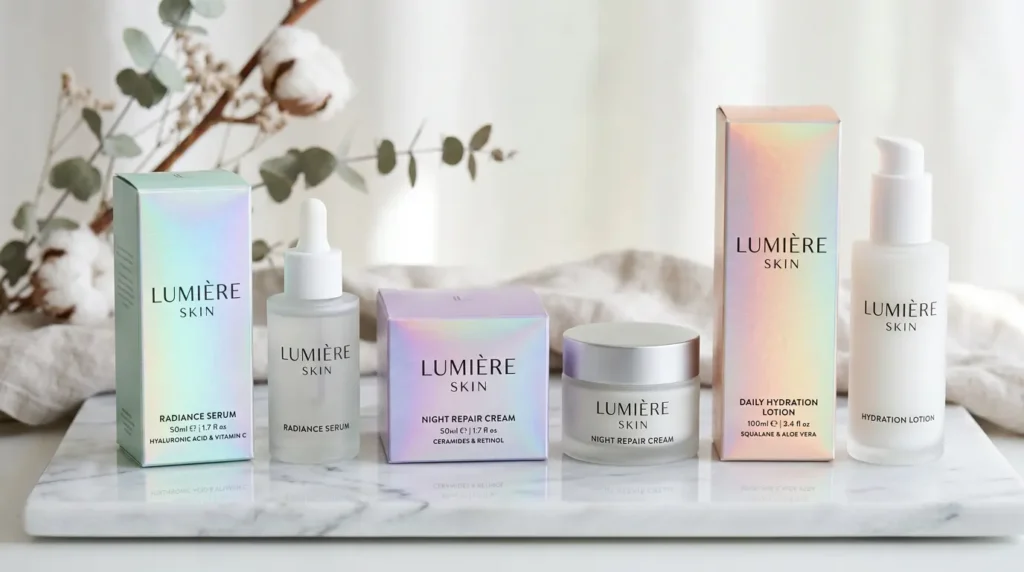
Beauty, Skincare, and Cosmetics
This is the natural home of holographic packaging. From serums and face masks to makeup palettes and lip glosses, beauty brands have long understood that the packaging is part of the product. Holographic boxes instantly communicate that your cosmetics are premium, trend-forward, and worth the splurge. They also photograph and film beautifully – a non-negotiable in today’s beauty marketing landscape.
Jewelry and Accessories
When someone buys a piece of jewelry, they’re buying an emotional experience – for themselves or for someone they love. A holographic jewelry box elevates that emotional moment. It says: this gift is worth celebrating. It also makes the unboxing feel like a genuine occasion, creating lasting brand memory long after the purchase.
Gourmet Food and Confectionery
Artisan chocolates, luxury teas, premium snacks, and gifting confectionery all benefit enormously from holographic packaging. The shimmer communicates craftsmanship and quality in a category where visual differentiation is everything on a shelf. A plain brown box of chocolates says “nice treat.” A holographic box says “unforgettable gift.”
Candles and Wellness Products
The wellness category is intensely personal – people who buy luxury candles, bath products, and self-care items are making a statement about their identity and values. Holographic packaging mirrors that sense of the extraordinary, helping small-batch and artisan brands compete confidently with larger names.
Other categories where holographic boxes deliver strong results include:
- Tech accessories and gadget gifts
- Subscription box services seeking a signature unboxing moment
- Limited edition product launches and seasonal collections
- Wedding favors, event gifts, and celebratory packaging
- Boutique apparel and fashion accessories
- Children’s toys and premium gift sets
🎨 How to Design for Holographic Packaging Without Getting Lost in the Shimmer
Here’s where a lot of brands stumble: they fall in love with the holographic effect and forget to think about how their own branding will work alongside it. Great holographic packaging design is about harmony, not competition. Your box should enhance your brand identity, not swallow it whole.
Choosing the Right Printing Approach
There are a few different ways to apply branding onto a holographic substrate, and the method you choose dramatically affects the final look:
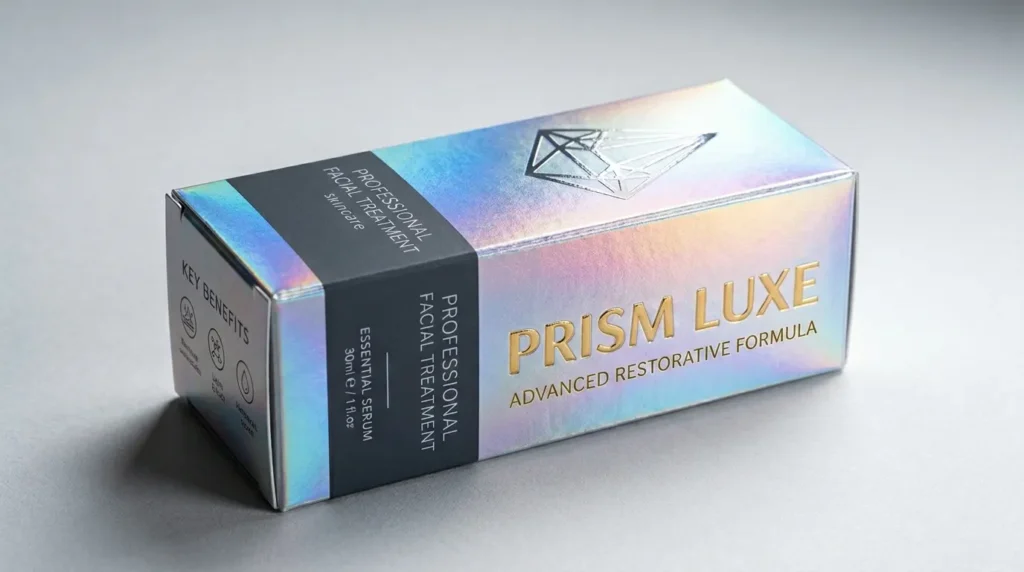
- Spot UV coating – applying a high-gloss varnish to specific areas like your logo creates a stunning contrast between matte elements and the holographic base
- Foil stamping – gold or silver foil applied over holographic material adds an additional layer of luxury and precision to key brand elements
- Printed color areas – using solid or opaque color blocks strategically “frames” your brand on the holographic surface, giving it breathing room and legibility
- Minimalist design approach – sometimes, less is more; a simple logo and clean layout lets the holographic material do the heavy lifting
Typography and Color Considerations
Because holographic backgrounds are visually busy, you need to think carefully about legibility. Dark, high-contrast typography generally works better than light or mid-tone text. Serif fonts and bold display typefaces hold their own against the shimmer. Thin, delicate letterforms can get visually “lost” in the iridescence.
For color choices, consider going either fully complementary – leaning into purples, blues, and pinks that echo the holographic spectrum – or intentionally contrasting, with crisp black and white brand elements that anchor against the shifting background.
When to Let the Box Be the Star
Not every holographic box needs heavy design work. Sometimes, a beautifully chosen holographic box style with a simple branded sticker or belly band is all you need – and it can look incredibly polished. This approach also gives small businesses maximum flexibility, since it requires minimal upfront investment while still delivering a premium unboxing result.
📦 Practical Questions Answered: MOQs, Lead Times, and Sustainability
We know that for small businesses and independent brands, the practical questions are just as important as the aesthetic ones. So let’s address the things you’re actually wondering about.
The Real Cost of “Standard” Minimum Orders (And Why They’re Killing Small Businesses)
One of the biggest barriers small brands face with premium packaging – including holographic boxes – is the dreaded minimum order quantity. Many suppliers require you to order 500, 1,000, or even 5,000 units before they’ll even talk to you. For a small business, that’s either a massive financial risk or a physical storage nightmare.
At Ray Packaging, we’ve built our entire model around eliminating this problem. We offer:
- No minimum order requirements – order exactly what you need
- Short-run printing that makes small batches genuinely cost-effective
- Flexible ordering that lets you test holographic packaging before committing to large quantities
- Transparent, upfront pricing with no hidden setup fees
Lead Times: How Fast Can You Get Holographic Boxes?
Lead times for holographic packaging vary depending on complexity and order size, but Ray Packaging works hard to turn projects around 8-10 working days especially for established customers with existing design files. You’ll always receive a clear production timeline upfront, so you can plan your launch, seasonal push, or restock without any last-minute surprises.
Is Holographic Packaging Sustainable?
This is one of the most common questions we receive, and it’s a genuinely important one. Traditional holographic foil packaging has historically involved non-recyclable plastic films. However, the packaging industry has made significant progress, and today there are more sustainable holographic options available than ever before:
- Recyclable holographic boards – newer substrate technologies that deliver the holographic effect with improved recyclability
- Reduced-plastic laminate options – thinner, more responsible foil applications
- Water-based coating alternatives – for brands that want the sheen with less environmental impact
- Holographic paper substrates – paper-based options that maintain recyclability while achieving iridescent effects
At Ray Packaging, we’re committed to helping you find packaging that aligns with both your brand values and your environmental commitments. We’ll always be transparent about materials and help you make informed decisions.
🚀 How to Launch Your First Holographic Box the Smart Way
Ready to make the leap? Here’s a practical, step-by-step approach to getting your holographic packaging right the first time – without costly mistakes or wasted investment.
- Clarify your brand identity first. Know your colors, your typeface, and your overall aesthetic before approaching packaging design. Holographic material is a backdrop – your brand still needs to be the story.
- Request physical material samples. Seeing holographic material on a screen is completely different from holding it under light. Always request samples before committing to a design direction.
- Start with a single SKU. Don’t overhaul your entire product line at once. Test holographic packaging on one hero product and measure the customer response – including social sharing and repurchase rates.
- Work with a team that understands print-on-holographic. Ray Packaging’s design experts know the nuances of preparing artwork for holographic substrates – trap settings, color overprinting, and spot UV placement all need specialist knowledge.
- Plan your photography and content strategy simultaneously. Holographic packaging changes how you shoot product photos. Plan for natural light, diffused studio lighting, and video content that shows the material shifting in real time.
💎 Why Ray Packaging Is Your Partner for Holographic Boxes That Actually Deliver
There are plenty of packaging suppliers out there. What sets Ray Packaging apart isn’t just the materials we offer – it’s how we think about the businesses we serve.
We’re Built for Real Businesses at Every Stage
Whether you’re a solo founder placing your first order or a growing brand scaling up production, Ray Packaging treats you like a priority. Our no-minimum model means you never have to overextend your budget or fill a storage unit with boxes you won’t need for six months. We grow with you – not ahead of you.
Expert Design Support, Not Just Order Processing
Ordering a box is easy. Getting a box that genuinely elevates your product and brand? That takes expertise. Our team understands the intersection of print, material, and brand identity – and we’re genuinely invested in helping you get it right. From recommending the best holographic finish for your product category to reviewing artwork before it goes to print, we’re a true partner in your packaging journey.
Quality That Shows Up Consistently
One of the most frustrating experiences for product brands is inconsistency between orders – colors shift, finishes change, boxes arrive damaged. At Ray Packaging, we’ve built rigorous quality control processes at every stage of production, so that box number 500 looks exactly as beautiful as box number one.
Ready to see what holographic packaging can do for your brand? Contact Ray Packaging today – no minimums, no pressure, expert guidance and packaging that makes your products impossible to ignore.
❓ Frequently Asked Questions About Holographic Boxes
Are holographic boxes more expensive than regular packaging?
Holographic boxes do typically cost more than standard kraft or plain white cartons, due to the specialized foil or film substrate involved. However, the premium they add to your product’s perceived value – and the brand equity they build – almost always justifies the investment. Ray Packaging also offers competitive pricing on small runs, so you can test without a large upfront commitment.
Can I print my logo and brand colors on a holographic box?
Absolutely. Printing on holographic substrates requires specialist knowledge, but it’s entirely achievable and can produce stunning results. Ray Packaging’s team prepares and reviews all artwork specifically for holographic printing, ensuring your brand elements are legible, well-placed, and beautifully rendered against the iridescent base material.
What types of products are best suited for holographic packaging?
Holographic packaging works beautifully across a wide range of categories, including beauty and skincare, jewelry, gourmet food and confectionery, candles, tech accessories, and premium gift products. The common thread is that these are products where presentation significantly influences the buying decision – either at point of sale or during the unboxing experience
Is there a minimum order quantity for holographic boxes at Ray Packaging?
Ray Packaging has no minimum order requirements, which means you can order exactly the quantity you need – whether that’s 50 units for a limited launch or 5,000 for a full production run. This flexibility is especially valuable for small businesses and independent brands who want to explore holographic packaging without overcommitting on inventory.
Are holographic boxes recyclable or environmentally friendly?
The sustainability of holographic packaging has improved significantly in recent years. Ray Packaging offers recyclable holographic boards, reduced-plastic laminate options, and paper-based holographic substrates. We’ll always discuss the environmental profile of your material choices upfront and help you find an option that aligns with your brand’s sustainability commitments.